


1. Introduction
Breast cancer surgery plays a crucial role in saving lives and restoring confidence for thousands of women and men affected by breast cancer in every year. With early detection and modern surgical techniques, breast cancer is no longer a condition to fear—it is a condition that can be treated effectively.
At Shri Harikarishan Nursing Home, Hazaribagh, breast cancer patients receive comprehensive and compassionate care guide by experienced specialists, Dr. Satveer Singh, Consultant Surgical Oncologist (Breast), Proctologist and Laparoscopic & Endoscopic Surgeon, who is known for precision-driven and patient-focused cancer surgery.
2. What Is Breast Cancer Surgery?
Breast cancer surgery is a medical procedure performed to remove cancerous tissue from the breast and, in some cases, nearby lymph nodes. The primary goal of surgery is to eliminate cancer while preserving as much healthy tissue and appearance as possible.
Surgery may be done:
- As the main treatment, or
- Along with chemotherapy, radiation therapy, or hormone therapy, depending on the stage of cancer.
3. Symptoms of Breast Cancer
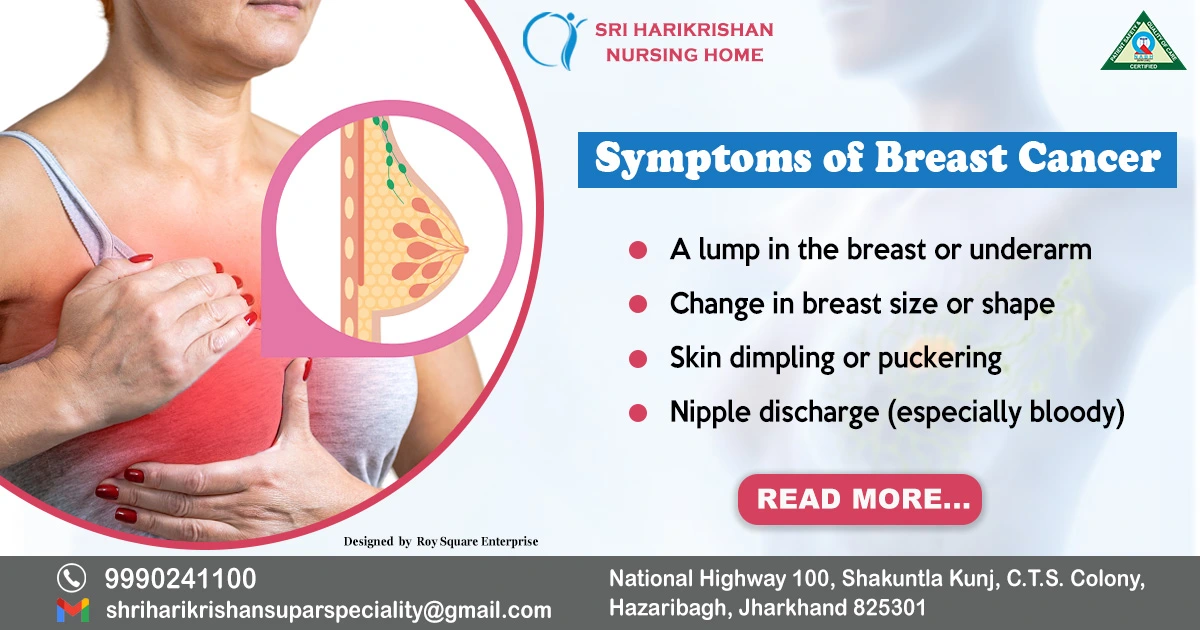
Early breast cancer may not cause pain, which is why awareness is essential. Common symptoms include:
- A lump in the breast or underarm
- Change in breast size or shape
- Skin dimpling or puckering
- Nipple discharge (especially bloody)
- Inverted nipple
- Redness or thickening of breast skin
- Persistent breast pain
Any unusual change should be evaluated promptly by a specialist.
4. Types of Breast Cancer Surgery
The type of surgery depends on tumor size, location, stage, and patient preference.
a. Lumpectomy (Breast-Conserving Surgery)
- Removes only the tumor and surrounding tissue
- Preserves most of the breast
- Usually followed by radiation therapy
b. Mastectomy
- Complete removal of one or both breasts
- Recommended for larger or multiple tumors
c. Modified Radical Mastectomy
- Removes breast tissue along with lymph nodes
- Common for invasive breast cancer
d. Sentinel Lymph Node Biopsy
- Removes the first lymph nodes where cancer may spread
- Reduces complications like arm swelling
e. Reconstructive Surgery
- Restores breast shape after mastectomy
- Can be done immediately or later
Advanced surgical planning ensures both medical safety and emotional well-being.
5. Causes of Breast Cancer
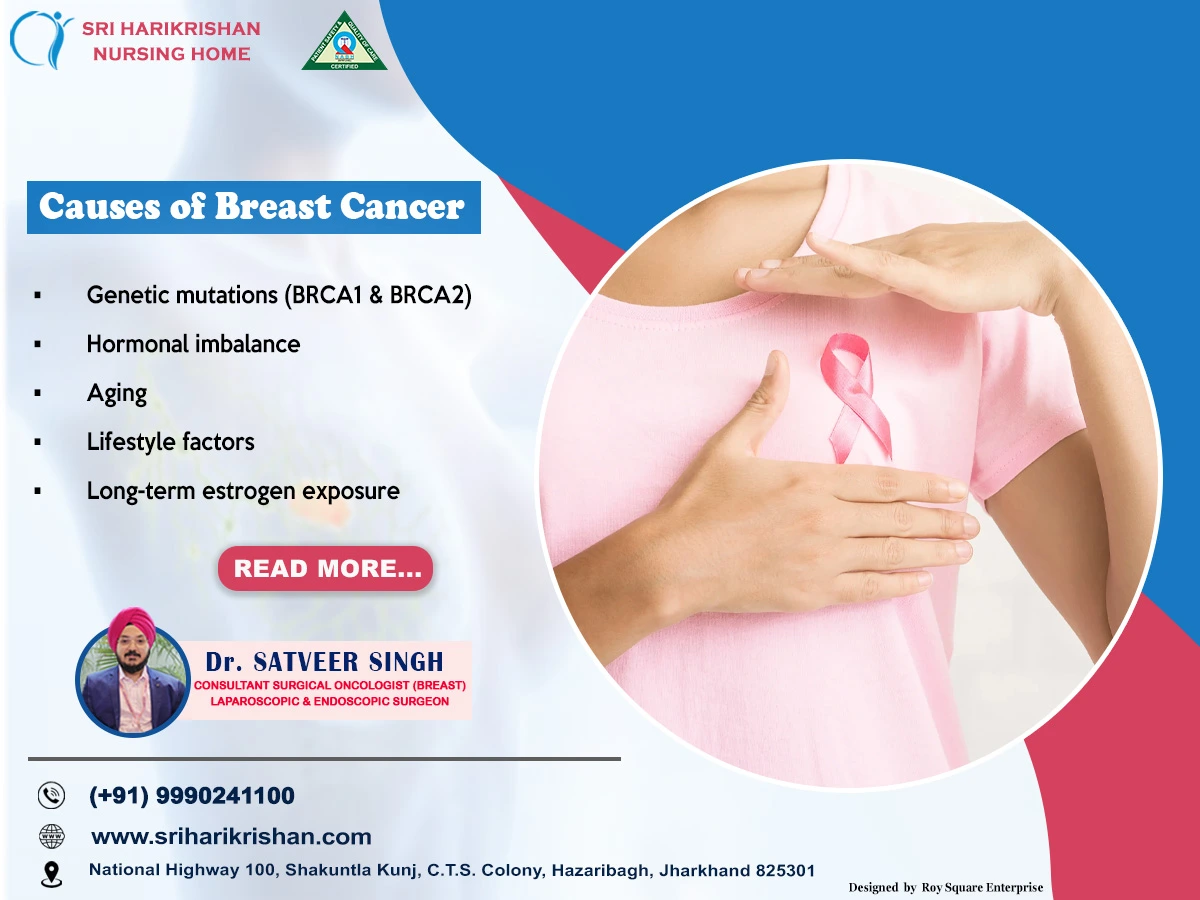
Breast cancer develops due to abnormal growth of breast cells. Common causes include:
- Genetic mutations (BRCA1 & BRCA2)
- Hormonal imbalance
- Aging
- Lifestyle factors
- Long-term estrogen exposure
While not all causes can be controlled, early screening saves lives.
6. Risk Factors
Certain factors increase the risk of breast cancer:
- Family history of breast cancer
- Increasing age
- Obesity
- Smoking and alcohol use
- Early menstruation or late menopause
- Hormone replacement therapy
- Lack of physical activity
Knowing your risk helps in early diagnosis and prevention.
7. Diagnosis
Accurate diagnosis is the foundation of successful treatment.
Diagnostic methods include:
- Clinical breast examination
- Mammography
- Breast ultrasound
- MRI scan
- Biopsy (core needle or surgical)
- Genetic testing (in selected cases)
At Shri Harikarishan Nursing Home, diagnosis is thorough and patient-friendly, ensuring clarity and confidence before treatment begins.
8. Treatment Options
Breast cancer treatment is often a combination of therapies:
a. Surgery
The main treatment to remove cancer tissue.
b. Chemotherapy
Used before or after surgery to destroy cancer cells.
c. Radiation Therapy
Kills remaining cancer cells after breast-conserving surgery.
d. Hormone Therapy
For hormone-positive breast cancers.
e. Targeted Therapy
Targets specific cancer cell proteins.
Surgical treatment performed by experienced surgeon Dr. Satveer Singh ensures accurate tumor removal with minimal complications.
9. Recovery After Breast Cancer Surgery
Recovery depends on the type of surgery and overall health.
What to expect:
- Mild pain and swelling initially
- Hospital stay of 1–3 days
- Gradual return to daily activities
- Physiotherapy for arm movement
- Emotional and psychological healing
With proper follow-up and care, most patients resume normal life smoothly.
10. Possible Complications
Though surgery is generally safe, some risks may include:
- Infection
- Bleeding
- Scarring
- Lymphedema (arm swelling)
- Temporary numbness
- Emotional distress
Choosing an experienced surgical team significantly reduces these risks
12. Why Choose Shri Harikarishan Nursing Home, Hazaribagh
Shri Harikarishan Nursing Home is a trusted center for breast cancer care, offering:
- Advanced surgical infrastructure
- Accurate diagnosis under one roof
- Personalized treatment plans
- Compassionate nursing support
- High safety and hygiene standards
Patients benefit from expert surgical care provided by Dr. Satveer Singh, Consultant Surgical Oncologist (Breast), Proctologist and Laparoscopic & Endoscopic Surgeon, who combines medical expertise with a patient-first approach.
13. Conclusion
Breast cancer surgery is not just about removing disease—it’s about restoring hope, strength, and confidence. With early diagnosis, expert surgical care, and emotional support, breast cancer can be treated successfully.
At Shri Harikarishan Nursing Home, Hazaribagh, patients receive trusted, advanced, and compassionate care that supports them through every step of their healing journey.
1. Is breast cancer surgery painful?
Pain is manageable with medications.
2. Can breast cancer be cured with surgery?
Early-stage cancer has very high cure rates.
3. Will I need chemotherapy after surgery?
Depends on cancer stage and type.
4. Can breast shape be restored?
Yes, with reconstructive surgery.
5. How long does surgery take?
Usually 1–3 hours.
6. Is mastectomy always required?
No, many cases can be treated with lumpectomy.
7. Can men get breast cancer?
Yes, though rare.
8. Will cancer come back after surgery?
Regular follow-ups reduce recurrence risk.
9. When can I return to work?
Usually within 2–4 weeks.
10. Is early detection important?
Yes, it greatly improves survival.