
Introduction
Pregnancy is a beautiful journey filled with joy and excitement, but it also brings several physical challenges. One of the most common and uncomfortable conditions that many pregnant women experience is piles (also known as hemorrhoids). These swollen veins in the rectal area can cause pain, itching, and discomfort, especially during the later stages of pregnancy.
In this comprehensive guide, we’ll explain everything about piles during pregnancy—from causes and symptoms to diagnosis, treatment options, and prevention. We’ll also share expert advice from Dr. Satveer Singh, Consultant Surgical Oncologist (Breast), Laparoscopic & Endoscopic Surgeon, and Back Pain Specialist, at Shri Harikrishan nursing Home, known as the best general surgeon in Hazaribagh, Jharkhand.

1. What Are Piles During Pregnancy?
Piles (hemorrhoids) are swollen and inflamed veins around the rectum or anus. During pregnancy, the pressure from the growing uterus and hormonal changes can cause these veins to expand and become painful.
There are two main types:
- Internal piles: Located inside the rectum and usually painless but may cause bleeding.
- External piles: Found under the skin around the anus and can be painful, itchy, and cause discomfort.
2. Symptoms of Piles during Pregnancy
Recognizing the symptoms early can help in timely management. Common symptoms include:
- Itching or irritation around the anus
- Pain or discomfort during bowel movements
- Swelling or lump near the anus
- Bleeding after passing stool
- Mucus discharge after defecation
- Feeling of incomplete bowel movement
If any of these symptoms worsen, consult Dr. Satveer Singh at Shri Harikrishan Nursing Home, Hazaribagh, for effective and safe treatment.
3. Types of Piles
Piles can be categorized based on their severity and location:
- Grade I: Small inflammations that are not visible outside the anus.
- Grade II: Larger piles that may come out during bowel movements but retract themselves.
- Grade III: Piles that prolapse and need manual assistance to push them back.
- Grade IV: Permanently prolapsed piles that remain outside the anus and require surgical intervention.
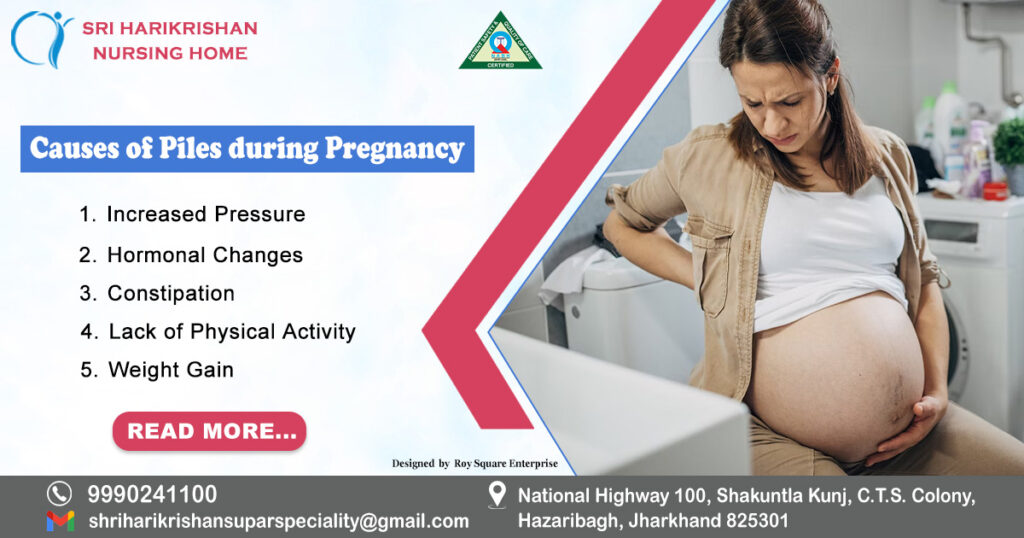
4. Causes of Piles during Pregnancy
There are several reasons why piles are common during pregnancy, including:
- Increased Pressure: The growing uterus puts pressure on the pelvic veins.
- Hormonal Changes: High progesterone levels relax vein walls, making them prone to swelling.
- Constipation: A common pregnancy issue that leads to straining during bowel movements.
- Lack of Physical Activity: Reduced mobility can worsen blood circulation.
- Weight Gain: Extra body weight adds more pressure to rectal veins.
5. Risk Factors
Certain factors increase the risk of developing piles during pregnancy:
- Family history of hemorrhoids
- Chronic constipation
- Multiple pregnancies
- Prolonged sitting or standing
- Low-fibre diet
- Obesity
Women who have had piles in earlier pregnancies are more likely to develop them again.
6. Diagnosis
Diagnosis of piles during pregnancy is usually straightforward. A doctor like Dr. Satveer Singh, best general surgeon in Hazaribagh, may recommend:
- Physical Examination: Visual inspection and digital rectal examination.
- Anoscopy: A small instrument used to look inside the anus.
- Proctoscopy/Colonoscopy: In rare cases, to rule out other causes of rectal bleeding.
7. Treatment Options
Treatment depends on the severity of the condition. Most mild cases can be managed at home, while severe ones may need medical intervention.
Home Remedies & Lifestyle Changes
- Eat a high-fibre diet (fruits, vegetables, and whole grains).
- Stay hydrated – drink plenty of water.
- Avoid straining during bowel movements.
- Do gentle exercises or prenatal yoga to improve circulation.
- Use cold compresses to reduce swelling.
- Apply doctor-prescribed ointments for relief.
Medical Treatments
If home remedies fail, medical options include:
- Topical creams or suppositories: Reduce pain and itching.
- Non-surgical procedures: Rubber band ligation or Sclerotherapy.
- Laser or Minimally Invasive Surgery: For severe or chronic piles.
Dr. Satveer Singh, Consultant Laparoscopic & Endoscopic Surgeon, offers advanced laser treatments for piles at Shri Harikrishan Nursing Home, Hazaribagh, ensuring minimal pain and faster recovery.
8. Recovery
Recovery depends on the treatment method.
- Mild cases: Improve within a few days with dietary changes.
- After Laser Surgery: Recovery usually takes 2–3 days with minimal discomfort.
- Postpartum Care: Continue a fibre-rich diet and stay active to prevent recurrence.
Follow your surgeon’s advice carefully for the best outcomes.
9. Complications
Untreated piles can lead to:
- Persistent bleeding
- Anaemia
- Blood clots in external piles (thrombosis hemorrhoids)
- Infection or abscess formation
- Prolapsed piles requiring surgery
Early consultation with Dr. Satveer Singh, the best general surgeon in Hazaribagh, can prevent these complications.
10. Top 10 Frequently Asked Questions (FAQs)
1. Can piles go away after pregnancy?
Yes, in most cases, piles shrink or disappear after childbirth, especially with proper care.
2. Are piles harmful to my baby?
No, piles don’t affect the baby directly, but they can cause discomfort for the mother.
3. Can I prevent piles during pregnancy?
Yes, by maintaining a high-fibre diet, drinking plenty of water, and avoiding constipation.
4. Is laser surgery safe during or after pregnancy?
Laser surgery is a safe, effective, and minimally invasive option, usually done post-delivery.
5. Can exercise help prevent piles?
Yes, light physical activities like walking and prenatal yoga help improve blood flow.
6. Is it normal to bleed with piles during pregnancy?
Mild bleeding can occur, but persistent bleeding should be checked by a doctor.
7. What should I eat if I have piles?
Eat fruits, vegetables, whole grains, and plenty of fluids to avoid constipation.
8. Are over-the-counter creams safe during pregnancy?
Only use medications prescribed by your doctor.
9. Can piles recur after treatment?
Yes, if preventive steps are not followed, they can come back.
10. Who is the best doctor for piles treatment in Hazaribagh?
Dr. Satveer Singh, Consultant Surgical Oncologist (Breast), Laparoscopic & Endoscopic Surgeon, is renowned for advanced laser piles treatment at Shri Harikrishan Nursing Home, Hazaribagh.
11. Why Choose Shri Harikrishan Nursing Home, Hazaribagh?
- Experienced Specialist: Led by Dr. Satveer Singh, the best general surgeon in Hazaribagh, specializing in laser and minimally invasive surgeries.
- Advanced Facilities: Equipped with modern diagnostic and treatment technologies.
- Personalized Care: Each patient receives customized treatment based on their condition.
- Quick Recovery: Focus on minimal pain, faster healing, and reduced hospital stay.
- Comprehensive Support: From consultation to recovery, every step is handled with care.
12. Conclusion
Piles during pregnancy can be painful, but with early diagnosis and proper care, they can be effectively managed. Simple lifestyle changes, a healthy diet, and expert medical guidance go a long way in providing relief.
For advanced, safe, and reliable treatment, consult Dr. Satveer Singh, Consultant Surgical Oncologist (Breast), Laparoscopic & Endoscopic Surgeon, and Back Pain Specialist, at Shri Harikrishan Nursing Home, Hazaribagh. With his expertise in laser and minimally invasive surgeries, patients experience faster recovery and long-term relief.