

1. Introduction
Gynaecomastia is a condition that affects men across all ages, leading to the enlargement of breast tissue. While it’s not life-threatening, it can cause emotional distress and lower self-confidence.
At Shri Harikrishan Nursing Home, Hazaribagh, expert surgical care is provided under the guidance of Dr. Satveer Singh, a highly skilled Consultant Surgical Oncologist (Breast), Proctologist, and Laparoscopic & Endoscopic Surgeon, who specializes in treating Gynaecomastia with precision and compassion.
This blog explores everything you need to know about Gynaecomastia—its causes, symptoms, treatment options, and how you can recover confidently.
2. What Is Gynaecomastia?
Gynaecomastia refers to the abnormal enlargement of male breast tissue, usually caused by a hormonal imbalance between estrogen (female hormone) and testosterone (male hormone).
It can occur in one or both breasts and is most commonly seen during puberty, middle age, or in older men. The condition is benign (non-cancerous) and often treatable with medical or surgical options.
3. Symptoms of Gynaecomastia
Common symptoms include:
- Swelling or enlargement of breast tissue in one or both sides.
- Tenderness or pain in the breast area.
- Firm or rubbery mass beneath the nipple.
- Nipple discharge (rare but requires immediate medical evaluation).
- Emotional distress or embarrassment due to physical appearance.
If you notice persistent swelling or discomfort, it’s essential to consult for accurate evaluation and treatment.
4. Types of Gynaecomastia
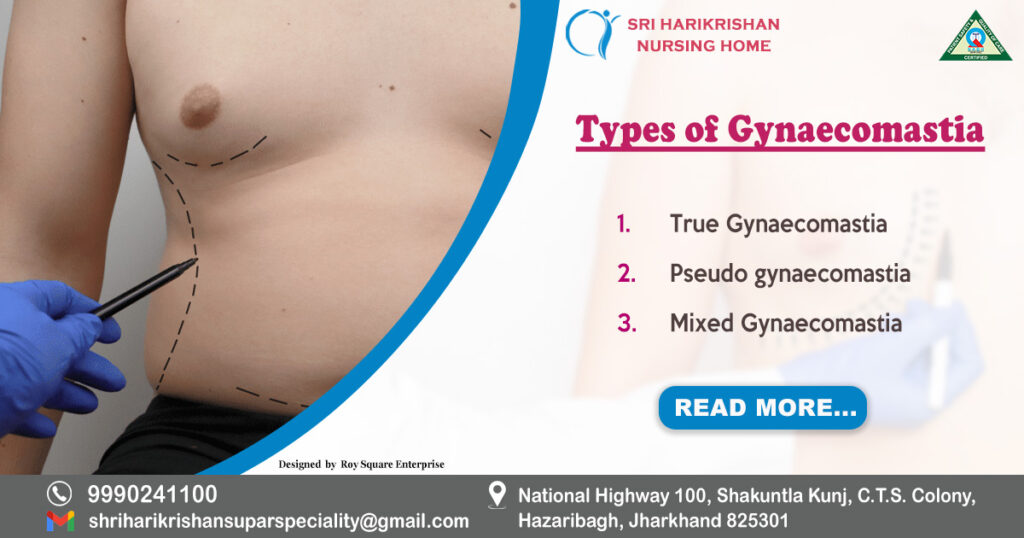
Gynaecomastia can be classified based on its cause or appearance:
a. True Gynaecomastia
Involves actual glandular breast tissue enlargement caused by hormonal imbalance.
b. Pseudo gynaecomastia
Appears similar but results from fat accumulation, often due to obesity, not glandular growth.
c. Mixed Gynaecomastia
A combination of both glandular and fatty tissue enlargement.
5. Causes of Gynaecomastia
Several factors can lead to gynaecomastia, including:
a. Hormonal Imbalance
- Low testosterone and high estrogen levels.
- Common during puberty, aging, or hormonal disorders.
b. Medications
Certain drugs can trigger gynaecomastia:
- Anti-androgens (used for prostate conditions).
- Anabolic steroids.
- Some antidepressants and heart medications.
c. Health Conditions
- Liver or kidney disease.
- Thyroid disorders.
- Tumours affecting hormone levels.
d. Substance Use
- Alcohol.
- Marijuana.
- Certain illicit drugs (e.g., heroin, amphetamines).
e. Obesity
Increases estrogen levels, contributing to breast tissue growth.
6. Risk Factors
Risk factors that increase the chance of developing gynaecomastia include:
- Puberty (temporary hormonal changes).
- Aging (reduced testosterone).
- Obesity.
- Chronic illnesses such as liver or kidney disease.
- Use of certain medications or supplements.
- Genetic predisposition.
7. Diagnosis
Diagnosis usually involves:
- Physical Examination – To assess breast tissue size and texture.
- Medical History Review – Including medications, lifestyle habits, and family history.
- Blood Tests – To check hormone levels.
- Imaging Tests – Ultrasound or mammogram to rule out other conditions.
- Biopsy (if required) – To exclude breast cancer in rare cases.
At Shri Harikrishan Nursing Home, patients receive a thorough diagnostic evaluation under Dr. Satveer Singh, ensuring accurate and personalized treatment planning.
8. Treatment Options
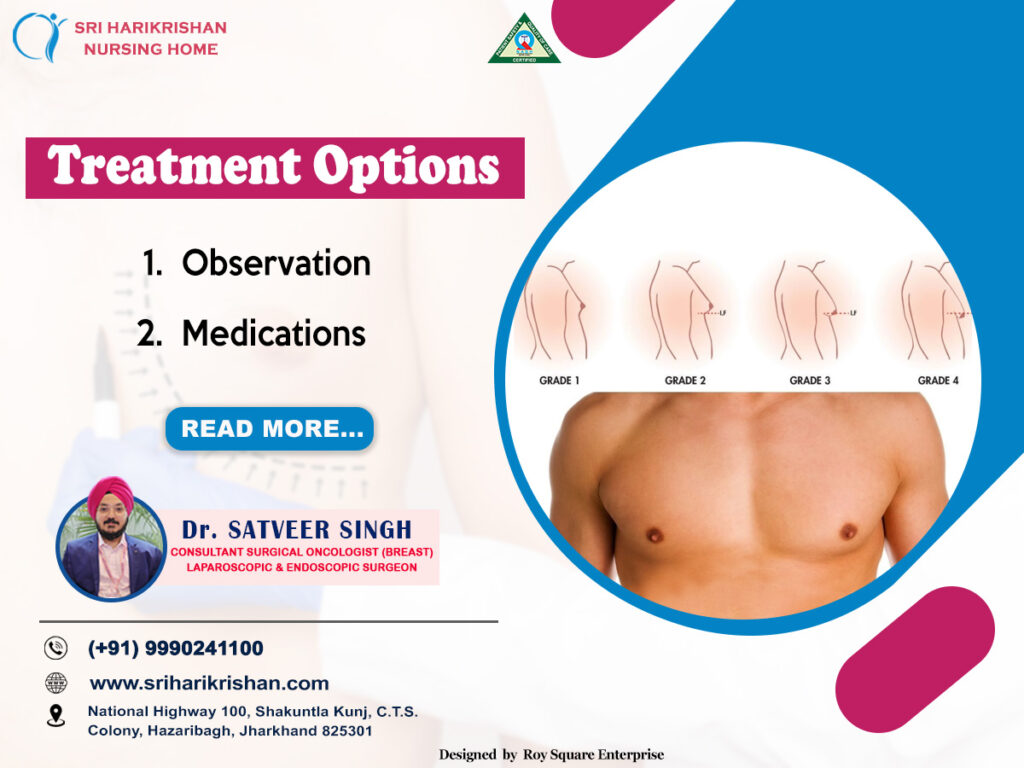
Treatment depends on the cause and severity of the condition.
a. Observation
For mild cases or puberty-related gynaecomastia, no treatment may be needed as it often resolves naturally.
b. Medications
In cases caused by hormonal imbalance, medications may be prescribed to restore hormone levels.
c. Surgical Treatment
For persistent or severe gynaecomastia, surgery is the most effective solution.
Common surgical options include:
- Liposuction: Removes excess fatty tissue around the chest area.
- Gland Excision Surgery: Removes glandular breast tissue.
- Combination Surgery: Liposuction with gland excision for best results.
At Shri Harikrishan Nursing Home, advanced laparoscopic and endoscopic techniques are used by Dr. Satveer Singh, ensuring minimal scarring, faster recovery, and enhanced aesthetic results. Add laser surgery method
9. Recovery after Treatment
Post-surgery recovery is generally smooth with proper care:
- Most patients can return to normal activities within 1–2 weeks. Add laser surgery method
- Compression garments are recommended to reduce swelling.
- Avoid strenuous exercise for a few weeks.
- Regular follow-ups ensure proper healing.
Dr. Satveer Singh and his dedicated team provide continuous post-operative guidance for a comfortable and confident recovery.
10. Possible Complications
Though rare, some potential complications include:
- Mild swelling or bruising.
- Temporary numbness around the chest area.
- Infection (if proper care isn’t maintained).
- Minor asymmetry.
When performed by an experienced surgeon, the risks are minimal, and outcomes are consistently positive.
11. Top 10 FAQs about Gynaecomastia
1. Is gynaecomastia dangerous?
No, it’s a benign condition but may cause psychological discomfort.
2. Can exercise or diet cure gynaecomastia?
If it’s due to fat (pseudo gynaecomastia), lifestyle changes may help. True gynaecomastia requires medical or surgical treatment.
3. Is gynaecomastia surgery safe?
Yes, when done by qualified professionals it’s a safe and effective procedure.
4. Will gynecomastia come back after surgery?
Recurrence is rare if the underlying cause is treated and healthy habits are maintained.
5. Does it affect fertility or hormones?
No, it doesn’t impact fertility once treated.
6. Can teenagers get gynecomastia?
Yes, hormonal changes during puberty can cause temporary gynecomastia.
7. Is gynecomastia surgery painful?
It’s performed under anaesthesia, and pain is minimal post-surgery with proper medication.
8. How long does the surgery take?
Usually between 1 to 2 hours, depending on severity.
9. Will there be visible scars?
Modern techniques ensure minimal or hidden scarring.
10. When can I return to work after surgery?
Most patients return within 5–7 days, depending on recovery progress.
12. Why Choose Shri Harikrishan Nursing Home, Hazaribagh
Choosing the right healthcare facility is crucial for successful outcomes.
Here’s why Shri Harikrishan Nursing Home stands out:
- Experienced Specialist: Under the expert care of Dr. Satveer Singh, an accomplished Consultant Surgical Oncologist (Breast), Proctologist, and Laparoscopic & Endoscopic Surgeon.
- State-of-the-art Facilities: Equipped with advanced surgical technology ensuring safe and precise procedures.
- Comprehensive Care: From diagnosis to recovery, every step is personalized.
- Minimal Scarring, Faster Recovery: Modern minimally invasive techniques for better aesthetic outcomes.
- Patient-Centric Approach: Compassionate care and constant support throughout the treatment journey.
Patients at Shri Harikrishan Nursing Home, Hazaribagh, experience both medical excellence and emotional reassurance during their treatment.
13. Conclusion
Gynecomastia, though not a life-threatening condition, can significantly affect self-esteem and body confidence. Thankfully, with the right diagnosis and treatment, it can be completely corrected.
At Shri Harikrishan Nursing Home, Hazaribagh, Dr. Satveer Singh offers advanced and personalized surgical solutions for Gynecomastia, helping patients regain confidence and comfort in their appearance.
If you’re struggling with Gynecomastia, take the first step toward a confident, healthy life. Consult the expert team at Shri Harikrishan Nursing Home, Hazaribagh today — because every man deserves to feel comfortable in his own body.