
1. Introduction
Digestive discomfort, burning stomach pain, or a feeling of uneasiness after meals — these can all be early warning signs of peptic ulcers, a common yet often misunderstood condition.
At Shri Harikrishan Nursing Home, Hazaribagh, patients receive expert diagnosis and care from Dr. Satveer Singh, best general surgeon in Jharkhand, a highly skilled Consultant Surgical Oncologist (Breast), Proctologist, and Laparoscopic & Endoscopic Surgeon, known for his precision and patient-centred approach.
Let’s explore everything you need to know about peptic ulcers — their causes, symptoms, treatments, and how to recover effectively for a healthier digestive life.

2. What Are Peptic Ulcers?
A peptic ulcer is a painful sore that develops on the inner lining of your stomach, small intestine, or oesophagus. These ulcers form when the protective mucus layer that shields the stomach from acid breaks down, allowing stomach acid to damage the tissue.
There are three main locations where peptic ulcers can develop:
- Gastric ulcer – occurs in the stomach lining.
- Duodenal ulcer – found in the first part of the small intestine (duodenum).
- Oesophageal ulcer – forms in the oesophagus (food pipe).
Though they sound alarming, most peptic ulcers can be treated effectively with proper medical guidance and lifestyle modifications.
3. Symptoms of Peptic Ulcers
Peptic ulcers often show clear signs. Some people, however, may experience mild or no symptoms at all.
Common symptoms include:
- Burning or sharp pain in the stomach, especially between meals or at night.
- Bloating or fullness even after small meals.
- Heartburn or acid reflux.
- Nausea or vomiting.
- Dark or black stools (indicating bleeding).
- Unexplained weight loss.
- Loss of appetite.
If you experience persistent stomach pain or notice blood in your stool or vomit, consult a specialist Dr. Satveer Singh, best general surgeon in Hazaribagh, immediately for a thorough evaluation.
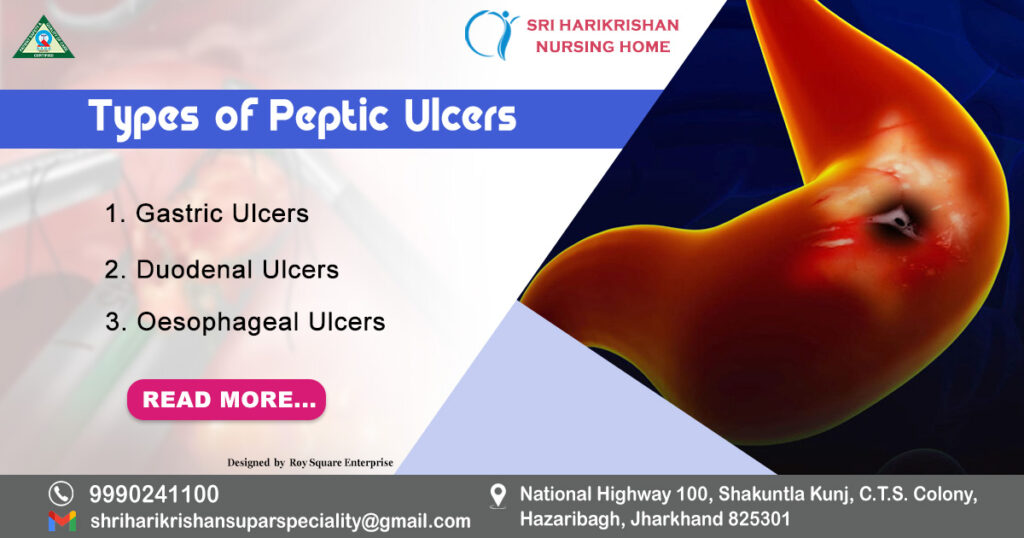
4. Types of Peptic Ulcers
Peptic ulcers are generally classified into two main types based on their location:
a. Gastric Ulcers
Develop on the inner lining of the stomach. Pain typically worsens after eating.
b. Duodenal Ulcers
Occur in the small intestine (duodenum). Pain often appears a few hours after meals or during the night.
C. Oesophageal Ulcers
These ulcers develop in the oesophagus due to acid reflux or long-term medication use.
5. Causes of Peptic Ulcers
Several factors can damage the protective lining of the stomach and lead to ulcer formation:
a. Helicobacter pylori (H. pylori) Infection
This bacterium weakens the mucous coating of the stomach and allows acid to irritate the lining.
b. Long-Term Use of NSAIDs
Frequent use of no steroidal anti-inflammatory drugs (like ibuprofen or aspirin) can irritate or inflame the stomach lining.
c. Excess Stomach Acid
Conditions like Zollinger-Ellison syndrome can lead to excess acid production.
d. Stress and Lifestyle
Though not the direct cause, stress, smoking, alcohol consumption, and poor diet can worsen ulcer symptoms.
e. Spicy or Acidic Foods
These do not cause ulcers but can aggravate the condition once it develops.
6. Risk Factors
Certain factors can increase the likelihood of developing a peptic ulcer:
- Smoking: Increases acid production and slows healing.
- Heavy Alcohol Use: Irritates and erodes the stomach lining.
- Family History of Ulcers.
- Use of NSAIDs or Steroids.
- Chronic Illnesses: Like liver disease or kidney failure.
- Age: More common in adults above 50 years.
Being aware of these risk factors can help prevent ulcers and promote better digestive health.
7. Diagnosis
Diagnosing a peptic ulcer involves several steps to identify the cause and extent of damage.
At Shri Harikrishan Nursing Home, the diagnostic process is thorough and patient-friendly.
a. Medical History and Physical Exam
The doctor reviews symptoms, medications, and health history.
b. Endoscopy
A thin tube with a camera (endoscope) is inserted through the mouth to view the stomach and duodenum directly.
Dr. Satveer Singh, with his expertise in Laparoscopic & Endoscopic Surgery, performs this with utmost care and precision.
c. Biopsy
During endoscopy, a small tissue sample may be taken to check for H. pylori infection or rule out other diseases.
d. Laboratory Tests
Blood, stool, or breath tests can detect H. pylori bacteria accurately.
e. Imaging Tests
An upper gastrointestinal (GI) series or CT scan may be used if needed.
8. Treatment Options
The treatment for peptic ulcers aims to reduce acid, promote healing, and eliminate infection if present.
a. Medications
- Antibiotics: To kill H. pylori bacteria (usually a combination of 2–3 antibiotics).
- Proton Pump Inhibitors (PPIs): Reduce acid production and help healing.
- H2-Receptor Blockers: Decrease stomach acid levels.
- Antacids: Provide quick relief from pain.
- Cytoprotective Agents: Protect the stomach lining from acid damage.
b. Lifestyle Changes
- Eat smaller, balanced meals.
- Avoid alcohol, caffeine, and spicy foods.
- Quit smoking.
- Manage stress through relaxation and adequate sleep.
c. Surgical Treatment
If the ulcer doesn’t heal with medication or leads to complications, surgery may be required.
Dr. Satveer Singh, at Shri Harikrishan Nursing Home, performs advanced laparoscopic and endoscopic surgeries for ulcers, ensuring minimal scarring, faster recovery, and lasting results.
9. Recovery after Treatment
Recovery depends on the cause and severity of the ulcer.
Here’s what to expect:
- Most patients begin to feel relief within a few days of treatment.
- Complete healing can take 4–8 weeks with medication.
- Follow-up tests ensure H. pylori are completely eradicated.
- Adopting a healthy lifestyle greatly prevents recurrence.
At Shri Harikrishan Nursing Home, every patient receives personalized care and dietary guidance during recovery for complete healing and prevention of future ulcers.
10. Possible Complications
If left untreated, peptic ulcers can cause serious complications:
- Bleeding ulcers (may cause vomiting of blood or black stools).
- Perforation: A hole in the stomach or intestine wall causing severe pain.
- Obstruction: Swelling or scarring can block food passage.
- Infection (Peritonitis): Life-threatening if the ulcer ruptures.
Prompt treatment and regular follow-ups with experts Dr. Satveer Singh can help avoid these serious risks.
11. Top 10 FAQs about Peptic Ulcers
1. Can peptic ulcers heal on their own?
Some mild ulcers may heal naturally, but medical treatment ensures full recovery and prevents recurrence.
2. is peptic ulcer a serious condition?
Not usually, but untreated ulcers can cause severe complications like bleeding or perforation.
3. Can stress cause ulcers?
Stress doesn’t directly cause ulcers but can worsen symptoms.
4. What foods should I avoid with an ulcer?
Avoid spicy, acidic, and fatty foods, as well as alcohol and caffeine.
5. Is surgery necessary for all ulcers?
No, most ulcers heal with medication, but surgery may be required for complex cases.
6. How long does ulcer healing take?
Typically, 4–8 weeks with proper treatment.
7. Can ulcers return after treatment?
Yes, if H. pylori infection isn’t completely cleared or NSAIDs are continued.
8. Are peptic ulcers contagious?
The H. pylori bacteria can spread, but ulcers themselves are not contagious.
9. Can I live a normal life after treatment?
Absolutely! With proper care, diet, and follow-up, you can live ulcer-free.
10. When should I see a doctor?
If you experience severe abdominal pain, vomiting bloods, or black stools, seek medical help immediately.
12. Why Choose Dr. Satveer Singh & Shri Harikrishan Nursing Home
When it comes to digestive health, expert hands make all the difference.
Here’s why patients from across Jharkhand and beyond trust Dr. Satveer Singh and Shri Harikrishan Nursing Home, Hazaribagh: best general surgeon in Jharkhand.
- Highly Experienced Surgeon:
Dr. Satveer Singh is a renowned Consultant Surgical Oncologist (Breast), Proctologist, and Laparoscopic & Endoscopic Surgeon, with vast experience in treating peptic ulcers and other gastrointestinal conditions. - Advanced Diagnostic & Surgical Facilities:
Equipped with state-of-the-art endoscopic and laparoscopic technology ensuring accuracy and faster recovery. - Personalized Patient Care:
Every treatment plan is tailored to the individual’s condition and comfort. - Comprehensive Approach:
From diagnosis to diet advice, post-surgery care, and follow-ups — everything is managed under one roof. - Trusted Reputation:
Shri Harikrishan Nursing Home has become a trusted name in Hazaribagh for quality healthcare and compassionate service.
13. Conclusion
Peptic ulcers are common but completely treatable when addressed on time. Recognizing symptoms early, maintaining a balanced lifestyle, and seeking expert medical care can ensure a quick recovery and long-term relief.
At Shri Harikrishan Nursing Home, Hazaribagh, best general surgeon in Jharkhand Dr. Satveer Singh and his dedicated team offer advanced, patient-focused treatment that not only heals ulcers but restores overall digestive wellness.
If you or a loved one is struggling with ulcer symptoms, don’t ignore them — consult an expert and take the first step toward a pain-free, healthier life today.