
Peptic ulcer disease is often manageable with medicines, but in some cases it turns into a serious medical emergency. Severe pain, internal bleeding, or a sudden perforation of the stomach or intestine can put life at risk if surgery is delayed. Thanks to modern medical advances, laparoscopic peptic ulcer surgery has emerged as a safer, less painful, and highly effective treatment option.
At Shri Harikrishan Nursing Home, Hazaribagh, patients receive timely diagnosis and advanced minimally invasive care under experienced specialists, ensuring both safety and comfort during treatment.
1. What Is Laparoscopic Peptic Ulcer Surgery?
Laparoscopic peptic ulcer surgery is a minimally invasive procedure used to treat complicated peptic ulcers that cannot heal with medication alone. The surgery is performed through small incisions using a camera and specialized instruments, allowing surgeons to repair the ulcer safely with minimal damage to surrounding tissues.
This approach is especially useful in emergency situations such as perforation or uncontrolled bleeding.
2. When Is Laparoscopic Surgery Needed for Peptic Ulcer?
Surgery becomes necessary when a peptic ulcer leads to serious complications, including:
- Perforated ulcer (a hole in the stomach or intestine)
- Severe internal bleeding
- Gastric outlet obstruction (blockage preventing food passage)
- Recurrent ulcers not responding to treatment
- Suspected cancer-related ulcers
In such cases, laparoscopic surgery helps stabilize the patient quickly and prevents life-threatening outcomes.
3. Causes Leading to Surgical Peptic Ulcer
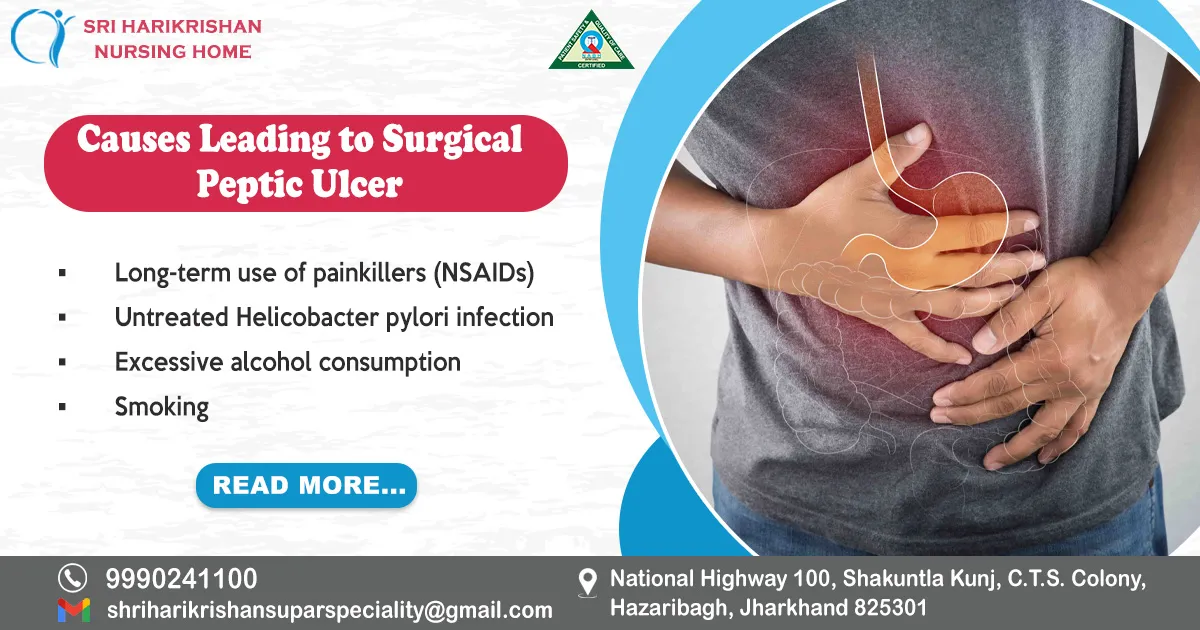
Several factors increase the risk of ulcers progressing to a surgical stage:
- Long-term use of painkillers (NSAIDs)
- Untreated Helicobacter pylori infection
- Excessive alcohol consumption
- Smoking
- Severe stress or trauma
- Delayed diagnosis or irregular treatment
Identifying these causes early can often prevent the need for surgery.
4. Symptoms That Indicate a Surgical Emergency
- Sudden, severe upper abdominal pain
- Vomiting blood or coffee-ground–like material
- Black or tarry stools
- Severe abdominal swelling or stiffness
- Dizziness, fainting, or rapid heartbeat
These symptoms suggest internal bleeding or perforation and should never be ignored.
5. Diagnosis Before Laparoscopic Peptic Ulcer Surgery
Accurate diagnosis is crucial before proceeding with surgery. Doctors may recommend:
- Upper gastrointestinal endoscopy
- CT scan or abdominal X-ray
- Blood tests to check infection and blood loss
- Ultrasound in emergency settings
These tests help confirm the severity and guide the surgical plan.
6. Laparoscopic Peptic Ulcer Surgery – Step by Step
The procedure typically involves:
- Making small incisions in the abdomen
- Inserting a laparoscope for clear visualization
- Locating the ulcer or perforation
- Closing the ulcer using sutures or an omental patch
- Cleaning the abdominal cavity to prevent infection
- Closing the incisions with minimal scarring
The entire procedure is performed with precision, reducing trauma to the body.
7. Benefits of Laparoscopic Peptic Ulcer Surgery
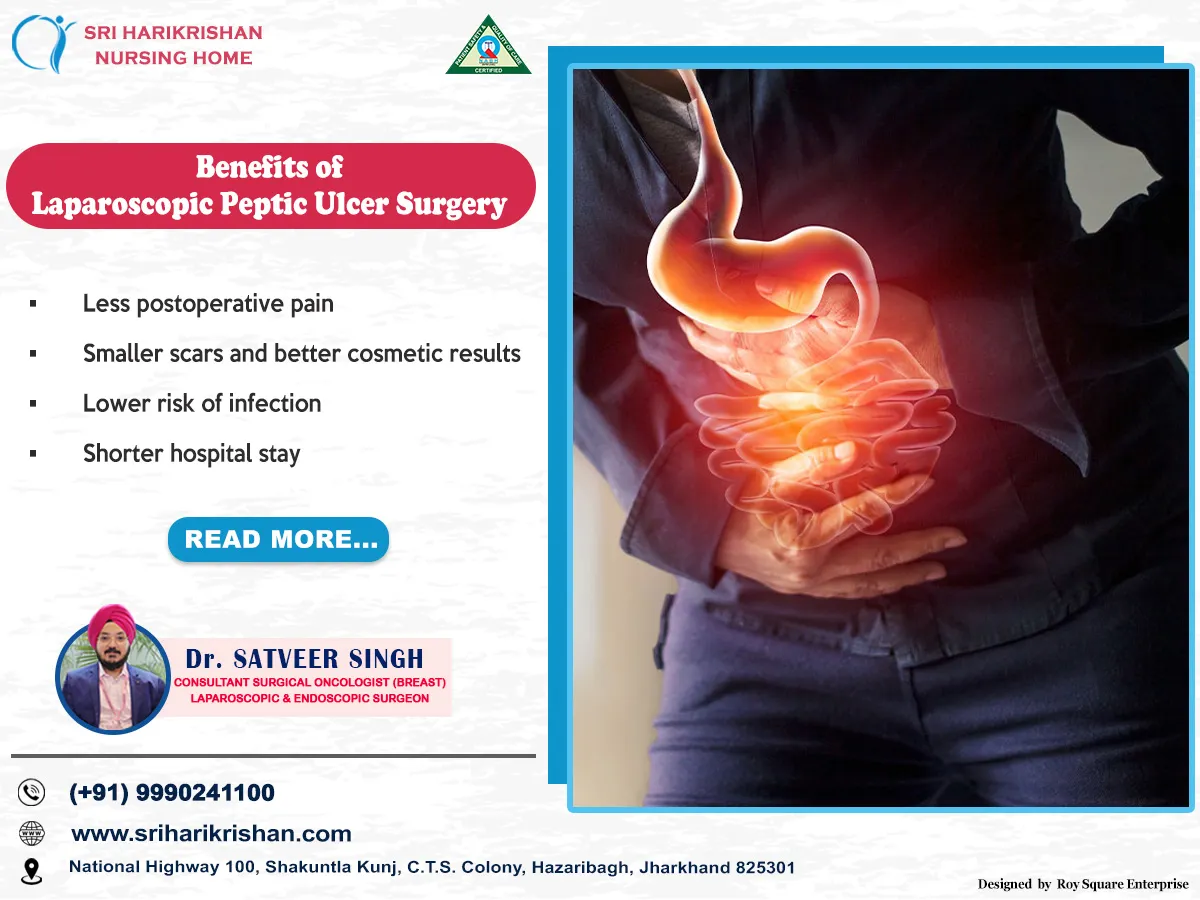
This modern approach offers several advantages:
- Less postoperative pain
- Smaller scars and better cosmetic results
- Lower risk of infection
- Shorter hospital stay
- Faster recovery and return to normal activities
These benefits make laparoscopic surgery the preferred choice whenever possible.
8. Recovery After Surgery
Recovery is generally smooth with proper care:
- Hospital stay of 3–5 days
- Gradual return from liquid to solid diet
- Pain managed with mild medications
- Avoidance of alcohol and smoking
- Regular follow-up visits
9. Possible Complications If Surgery Is Delayed
- Widespread abdominal infection (peritonitis)
- Sepsis
- Severe blood loss
- Long-term digestive problems
- Increased risk of death
Early intervention significantly reduces these risks.
10. Role of a Specialist in Laparoscopic Peptic Ulcer Surgery
Successful outcomes depend on expert surgical judgment and experience.
Dr. Satveer Singh, consultant Surgical Oncologist (Breast), proctologist, Endoscopic Surgeon, Laparoscopic & Back Pain Specialist, play an important role in evaluating complex abdominal emergencies and guiding patients toward timely surgical care at Shri Harikrishan Nursing Home, Hazaribagh.
His multidisciplinary expertise ensures safe diagnosis, precise surgery, and structured postoperative care.
11. Why Choose Shri Harikrishan Nursing Home, Hazaribagh
- Advanced laparoscopic facilities
- Emergency surgical care
- Experienced specialist Dr. Satveer Singh
- Patient-centered treatment approach
- Trusted and compassionate medical support
The hospital focuses on safety, precision, and faster recovery for every patient.
12. Conclusion
Laparoscopic peptic ulcer surgery is a life-saving option when ulcers progress beyond medical management. Early recognition of warning signs, prompt diagnosis, and expert surgical care can make a critical difference.
With advanced facilities and experienced specialists like Dr. Satveer Singh at Shri Harikrishan Nursing Home, Hazaribagh, patients receive reliable, modern, and compassionate treatment. If severe abdominal pain or alarming symptoms appear, timely medical attention can protect health—and save lives.
1. Is laparoscopic peptic ulcer surgery safe?
Yes, it is considered safe and effective when performed by experienced surgeons.
2. How long does the surgery take?
Usually 1–2 hours, depending on complexity.
3. Will there be large scars?
No, scars are minimal due to small incisions.
4. Can ulcers heal without surgery?
Yes, many do, but complicated ulcers require surgery.
5. Is the recovery painful?
Pain is usually mild and well-controlled.
6. Can ulcers return after surgery?
Lifestyle changes and medication reduce recurrence risk.
7. When can normal food be resumed?
Gradually, under medical guidance.
8. Is hospitalization necessary?
Yes, especially in emergency cases.
9. Can surgery prevent future complications?
Timely surgery greatly reduces future risks.
10. When should I consult a specialist?
Immediately if severe pain or bleeding occurs.