

Piles (hemorrhoids) affect millions of people, yet many hesitate to seek medical help due to embarrassment. In this situation, people often turn to natural practices like Ashwini Mudra for relief. While Ashwini Mudra has real benefits for digestion and anal muscle strength, it is important to understand one crucial fact: piles are not always harmless.
This guide explains when Ashwini Mudra helps, when it is not enough, and why delaying proper treatment can turn piles into a medical emergency. Awareness, not fear, is the goal—so you can make informed decisions about your health

1. What Is Ashwini Mudra and Its Role in Piles
Ashwini Mudra is a yogic practice involving rhythmic contraction and relaxation of the anal muscles. The name comes from “Ashwa” (horse), symbolizing strength and control.
For piles, Ashwini Mudra:
- Improves blood circulation in the anal area
- Strengthens rectal muscles
- Helps bowel control
- Supports digestion and constipation relief
It works best as a supportive practice, especially in early or mild cases.
2. How to Know When Piles Are No Longer Simple
Piles should never be ignored when symptoms change. Warning signs include:
- Continuous or heavy rectal bleeding
- Severe pain or swelling around the anus
- Hard, painful lump near the anus
- Black or dark stools
- Fever with anal pain
- Weakness or dizziness
When these appear, Ashwini Mudra alone is not enough.
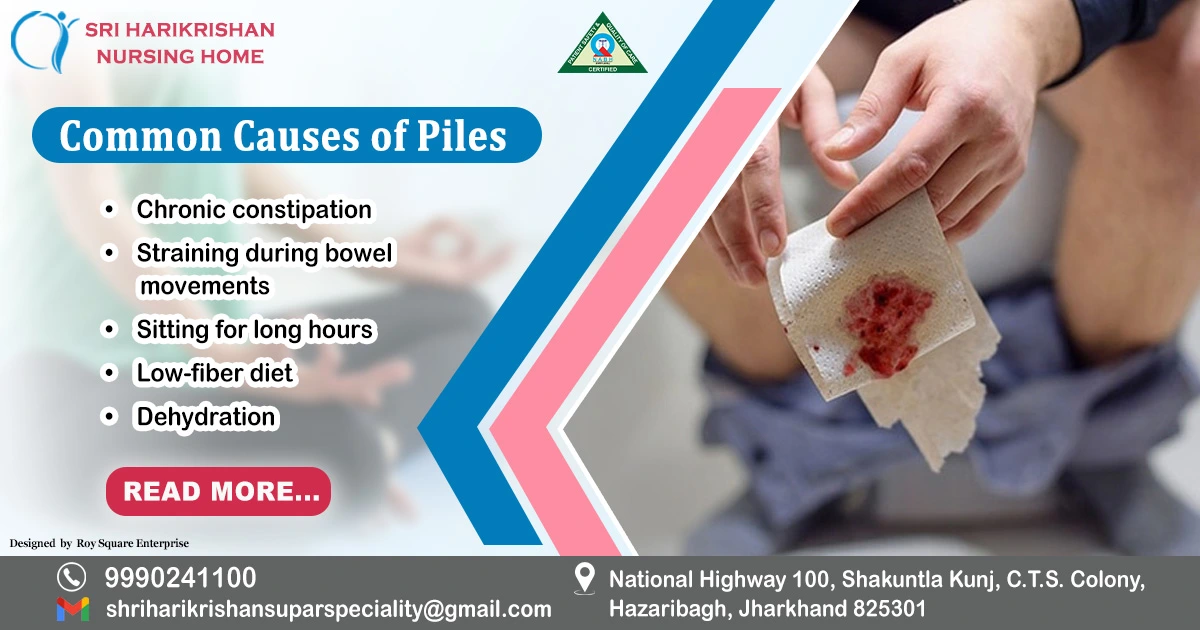
3. Common Causes of Piles
Understanding causes helps prevent worsening:
- Chronic constipation
- Straining during bowel movements
- Sitting for long hours
- Low-fiber diet
- Dehydration
- Obesity
- Pregnancy
- Aging
Ignoring these factors increases pressure on rectal veins.
4. Risk Factors That Make Piles More Dangerous
Some people face higher risks of complications:
- Diabetes
- Liver disease
- Poor immunity
- Chronic smokers or alcohol users
- Sedentary lifestyle
- Delaying medical consultation
In these cases, piles can progress faster and become serious.
5. Diagnosis: Why Medical Evaluation Matters
Medical diagnosis ensures piles are not confused with other serious conditions.
Doctors may use:
- Physical examination
- Digital rectal exam
- Proctoscopy
- Colonoscopy (if bleeding is unexplained)
At Shri Harikrishan Nursing Home, modern diagnostic tools help detect problems early and safely.
6. 10 Powerful Reasons Piles Can Become a Medical Emergency
1. Excessive Rectal Bleeding
Prolonged bleeding can cause anemia and severe weakness.
2. Thrombosed Hemorrhoids
Blood clots inside piles cause intense pain and swelling.
3. Infection and Abscess Formation
Open wounds may get infected if untreated.
4. Strangulated Piles
Restricted blood supply can damage tissue permanently.
5. Severe, Unbearable Pain
Pain affecting daily life requires urgent care.
6. Prolapsed Piles That Cannot Be Pushed Back
This condition worsens rapidly without treatment.
7. Misdiagnosis of Serious Diseases
Bleeding may hide colorectal cancer or other disorders.
8. Failure of Home Remedies
When Ashwini Mudra and diet changes stop helping, delay becomes dangerous.
9. Mental and Emotional Stress
Chronic discomfort leads to anxiety, sleep problems, and depression.
10. Emergency Surgery Risk
Delayed treatment may leave no option except urgent surgery.
7. Urgent Treatment Options for Severe Piles
Depending on severity, treatment may include:
- Medications and ointments
- Rubber band ligation
- Sclerotherapy
- Laser piles treatment
- Surgical hemorrhoidectomy
Dr. Satveer Singh, consultant Surgical Oncologist (Breast), proctologist, Endoscopic Surgeon, Laparoscopic & Back Pain Specialist at Shri Harikrishan Nursing Home, Hazaribagh, emphasizes early intervention to avoid unnecessary complications and surgery.
8. Ashwini Mudra: Benefits and Proper Use
Benefits of Ashwini Mudra for Piles
- Improves blood circulation
- Strengthens anal muscles
- Reduces constipation
- Supports early-stage piles relief
- Helps prevent recurrence
Correct Way to Use
- Practice on an empty stomach
- Sit comfortably with a straight spine
- Gently contract and relax anal muscles
- Do 10–20 repetitions daily
Important Note
Ashwini Mudra supports healing, but it cannot cure advanced piles.
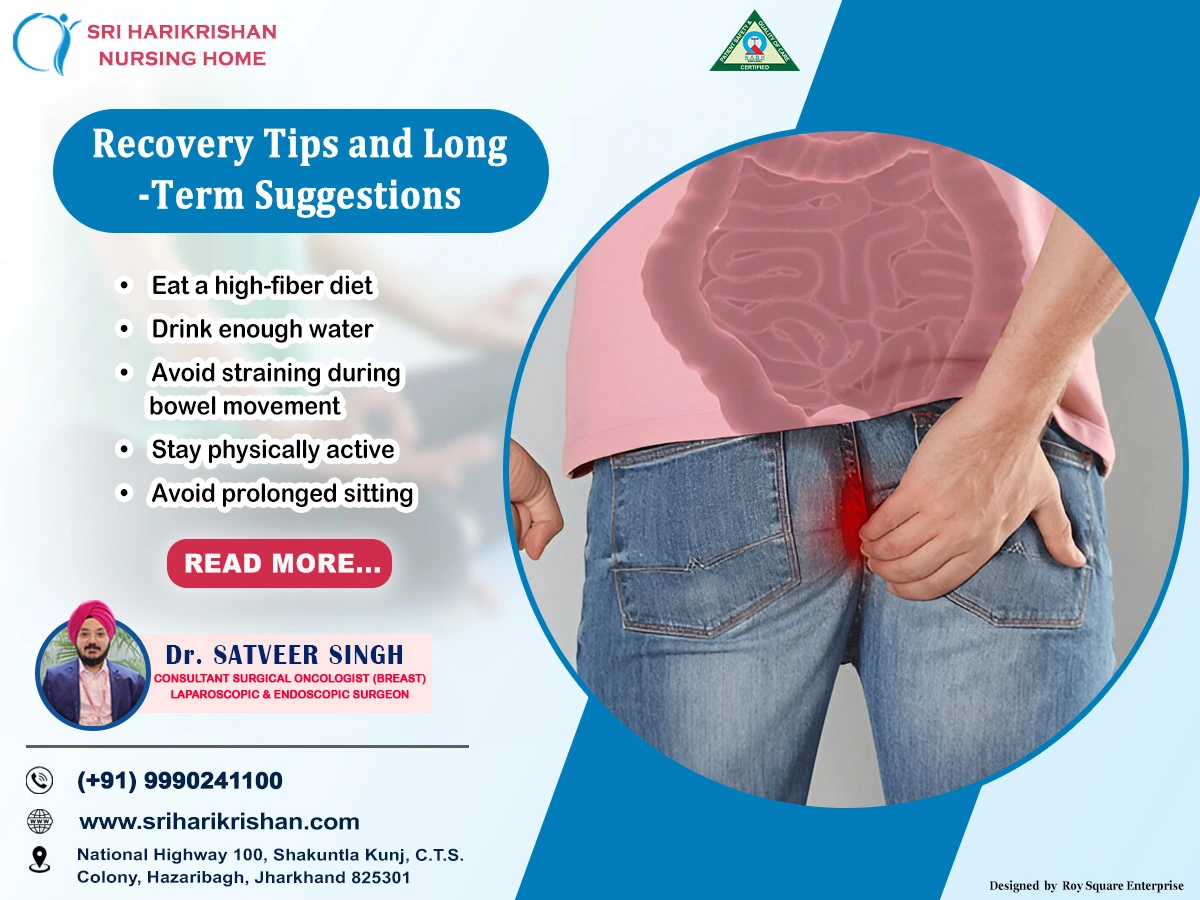
9. Recovery Tips and Long-Term Suggestions
For better recovery and prevention:
- Eat a high-fiber diet
- Drink enough water
- Avoid straining during bowel movement
- Stay physically active
- Avoid prolonged sitting
- Practice Ashwini Mudra regularly (after medical advice)
Patients under the guidance of Dr. Satveer Singh at Shri Harikrishan Nursing Home often recover faster due to a balanced approach combining medical care and lifestyle guidance.
10. Why Choose Shri Harikrishan Nursing Home, Hazaribagh
- Experienced proctology and surgical care
- Advanced diagnostic facilities
- Ethical and patient-focused treatment
- Minimally invasive options
- Trusted expertise of Dr. Satveer Singh, known for safe, evidence-based care
11. Conclusion
Ashwini Mudra is a valuable natural practice for supporting digestive health and early piles management. However, depending only on Ashwini Mudra while ignoring warning signs can turn piles into a medical emergency.
The safest approach is awareness, timely diagnosis, and balanced care. When symptoms worsen, professional medical guidance is essential
1. Can Ashwini Mudra cure piles completely?
No, it supports early relief but does not replace treatment.
2. Is piles always an emergency?
No, but severe symptoms make it one.
3. When should I stop home remedies?
If pain or bleeding persists.
4. Can piles bleeding be dangerous?
Yes, long-term bleeding causes anemia.
5. Is surgery always required?
No, early treatment avoids surgery.
6. Is Ashwini Mudra safe daily?
Yes, when practiced correctly.
7. Can piles return?
Yes, without lifestyle changes.
8. Is laser piles treatment safe?
Yes, under expert care.
9. How long does recovery take?
Depends on severity and treatment.
10. Who should I consult for piles?
A qualified proctologist.