

Introduction
Gallbladder problems, particularly gallstones, also known as cholecyst, can lead to severe abdominal pain, nausea, and digestive issues. Modern medicine now offers pain-free laparoscopic gallbladder removal—a minimally invasive procedure that ensures faster recovery, less discomfort, and excellent outcomes.
In this comprehensive, reader-friendly guide, we will explore everything you need to know about gallbladder removal, including causes, symptoms, treatment options, recovery, and expert medical advice from Dr. Satveer Singh, Consultant Surgical Oncologist (Breast), Laparoscopic & Endoscopic Surgeon, and Back Pain Specialist, renowned as the best general surgeon in Hazaribagh, Jharkhand at Shri Harikrishan Nursing Home.
1. What is Gallbladder Disease?
The gallbladder is a small organ located under the liver that stores bile, which aids in digesting fats. Problems arise when gallstones or inflammation obstruct bile flow.
Common gallbladder conditions include:
- Cholelithiasis (Gallstones): Hard deposits formed in the gallbladder.
- Cholecystitis: Inflammation of the gallbladder, often caused by gallstones.
- Gallbladder Polyps: Growths on the gallbladder lining.
- Biliary Dyskinesia: Poor bile movement leading to pain.
If left untreated, gallbladder issues can lead to infection or other serious complications.
2. Symptoms of Gallbladder Problems
Symptoms often vary depending on the condition:
- Sudden intense pain in the upper right abdomen
- Pain radiating to the shoulder or back
- Nausea or vomiting
- Bloating and indigestion
- Jaundice (yellowing of skin and eyes, in severe cases)
- Fever, if infection is present
Prompt evaluation by Dr. Satveer Singh, the best general surgeon in Hazaribagh, is crucial for proper diagnosis and timely treatment.
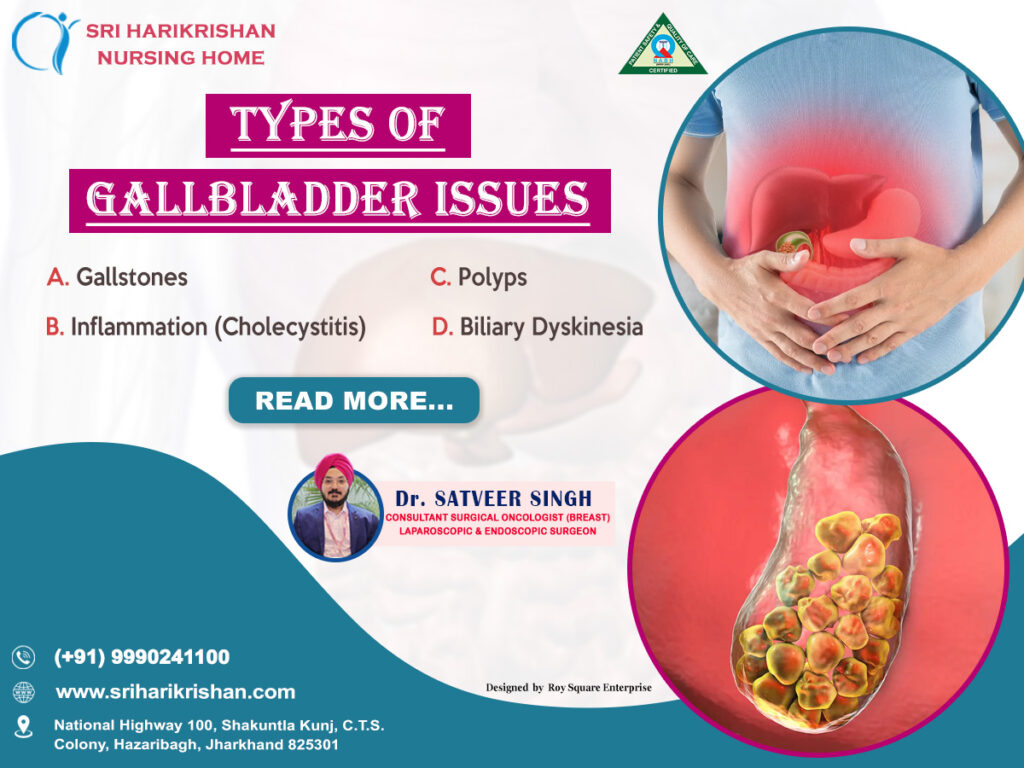
3. Types of Gallbladder Issues
A. Gallstones
- Cholesterol stones: Most common type, formed from excess cholesterol.
- Pigment stones: Made of bilirubin, often linked with liver disease.
B. Inflammation (Cholecystitis)
Acute or chronic inflammation due to gallstones blocking bile flow.
C. Polyps
Growths in the gallbladder lining, usually benign but sometimes require removal.
D. Biliary Dyskinesia
Reduced motility of bile, causing recurrent abdominal pain without gallstones.
4. Causes of Gallbladder Problems
- Excess cholesterol or bilirubin in bile
- Obesity and rapid weight loss
- High-fat diet
- Pregnancy and hormonal changes
- Family history of gallstones
- Liver disease or metabolic disorders
5. Risk Factors
Some people are more prone to gallbladder problems:
- Age above 40 years
- Female gender (hormonal factors)
- Obesity or high-fat diet
- Sedentary lifestyle
- Diabetes or insulin resistance
- Family history of gallbladder disease
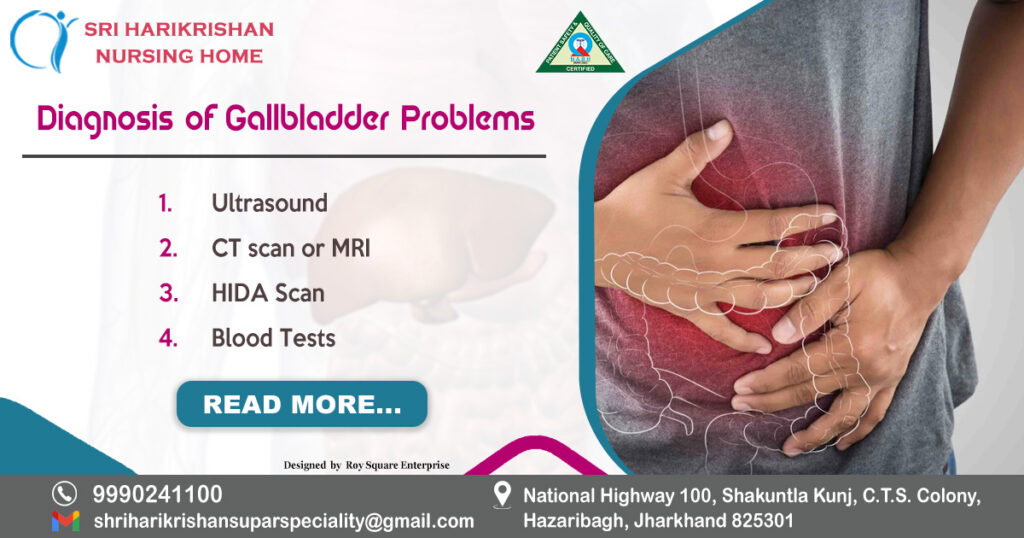
6. Diagnosis of Gallbladder Problems
Accurate diagnosis is essential for proper treatment. At Shri Harikrishan Nursing Home, Hazaribagh, Dr. Satveer Singh uses advanced tools for diagnosis:
- Ultrasound: First-line imaging for detecting gallstones and inflammation.
- CT scan or MRI: Detailed imaging for complex cases.
- HIDA Scan: Evaluates bile flow and gallbladder function.
- Blood Tests: Check for infection, inflammation, or liver function abnormalities.
Early diagnosis ensures safe and effective treatment with minimal complications.
7. Treatment Options
A. Non-Surgical Treatments
- Pain management with medications
- Dietary changes (low-fat diet)
- Monitoring small, asymptomatic gallstones
B. Surgical Treatment: Laparoscopic Gallbladder Removal
Laparoscopic cholecystectomy is now the gold standard for gallbladder removal. Key benefits include:
- Minimally invasive procedure using small incisions
- Pain-free or minimally painful recovery
- Faster healing and shorter hospital stay
- Reduced risk of complications compared to open surgery
- Quick return to normal activities
Dr. Satveer Singh, the best general surgeon in Hazaribagh, performs advanced laparoscopic procedures ensuring minimal pain, safety, and fast recovery.
8. Recovery after Laparoscopic Surgery
- Hospital Stay: Usually 1–2 days for observation.
- Pain Management: Mild discomfort manageable with medications.
- Diet: Start with liquids, gradually resume normal diet.
- Activity: Light walking recommended; avoid heavy lifting for 2–3 weeks.
- Follow-Up: Regular check-ups with Dr. Satveer Singh to ensure proper healing.
Most patients return to normal routine within 1–2 weeks.
9. Complications of Gallbladder Surgery
Though laparoscopic surgery is safe, possible complications include:
- Infection at incision sites
- Bleeding or hematoma
- Injury to nearby organs (rare)
- Bile leakage
- Blood clots
Early diagnosis and treatment by Dr. Satveer Singh minimize these risks.
10. Top 10 Frequently Asked Questions (FAQs)
1. Is laparoscopic cholecyst surgery painful?
Minimal discomfort is expected; modern techniques ensure a pain-free experience.
2. How long is the hospital stay?
Typically 1–2 days for observation.
3. Can I eat normally after surgery?
Yes, gradually resume a regular diet within a few days.
4. Is laparoscopic surgery safe for all patients?
Yes, most patients are eligible; your surgeon will assess your condition.
5. How soon can I resume work?
Light work within 1–2 weeks; full activity after 3–4 weeks.
6. Are there alternatives to surgery?
Small, asymptomatic gallstones may be monitored, but symptomatic stones require removal.
7. Can gallstones recur after surgery?
cholecyst removal eliminates the risk of recurrence.
8. Is laser involved in cholecyst removal?
Laparoscopic tools use small cameras and instruments, ensuring minimally invasive surgery.
9. Who is the best doctor for cholecyst surgery in Hazaribagh?
Dr. Satveer Singh, Consultant Surgical Oncologist (Breast), Laparoscopic & Endoscopic Surgeon, is widely recognized for pain-free, advanced cholecyst surgery.
10. What are the main benefits of laparoscopic surgery?
Minimal pain, faster recovery, small scars, shorter hospital stay, and early return to routine.
11. Why Choose Shri Harikrishan Nursing Home, Hazaribagh?
- Expert Surgeon: Led by Dr. Satveer Singh, the best general surgeon in Hazaribagh, experienced in laparoscopic and endoscopic procedures.
- Modern Facilities: Advanced diagnostic imaging and surgical equipment.
- Pain-Free Surgery: Focus on minimal discomfort and quick recovery.
- Personalized Care: Each patient receives customized treatment plans.
- Post-Surgery Support: Comprehensive follow-up for faster healing.
Patients benefit from expert care combined with modern technology for a safe and comfortable surgical experience.
12. Conclusion
cholecyst problems can significantly impact your quality of life. With pain-free laparoscopic cholecyst removal, modern medicine offers a safe and effective solution that ensures minimal discomfort, faster recovery, and excellent outcomes.
Consult Dr. Satveer Singh, Consultant Surgical Oncologist (Breast), Laparoscopic & Endoscopic Surgeon, and Back Pain Specialist, at Shri Harikrishan Nursing Home, Hazaribagh. His expertise in minimally invasive cholecyst surgery ensures a safe, fast, and life-changing treatment experience.
Take action today for pain-free digestion and better health!