
Digestive problems often start silently, but when symptoms suddenly worsen, they can turn into a medical emergency. In such moments, a safe endoscopy procedure becomes one of the most powerful diagnostic and life-saving tools in modern medicine. Endoscopy allows doctors to see what is happening inside the digestive tract in real time and act quickly—often preventing serious complications.
This guide explains when endoscopy becomes urgent, how the procedure works, and why choosing an experienced endoscopy, especially during emergencies.
1. What Is Endoscopy and Why It Matters
Endoscopy is a medical procedure that uses a thin, flexible tube with a camera and light to examine the digestive tract. It helps doctors detect problems in the esophagus, stomach, intestines, and colon without major surgery.
In emergency situations, endoscopy is not just diagnostic—it is often therapeutic, meaning treatment can be done immediately during the procedure.
2. How to Know When Endoscopy Is Needed Urgently
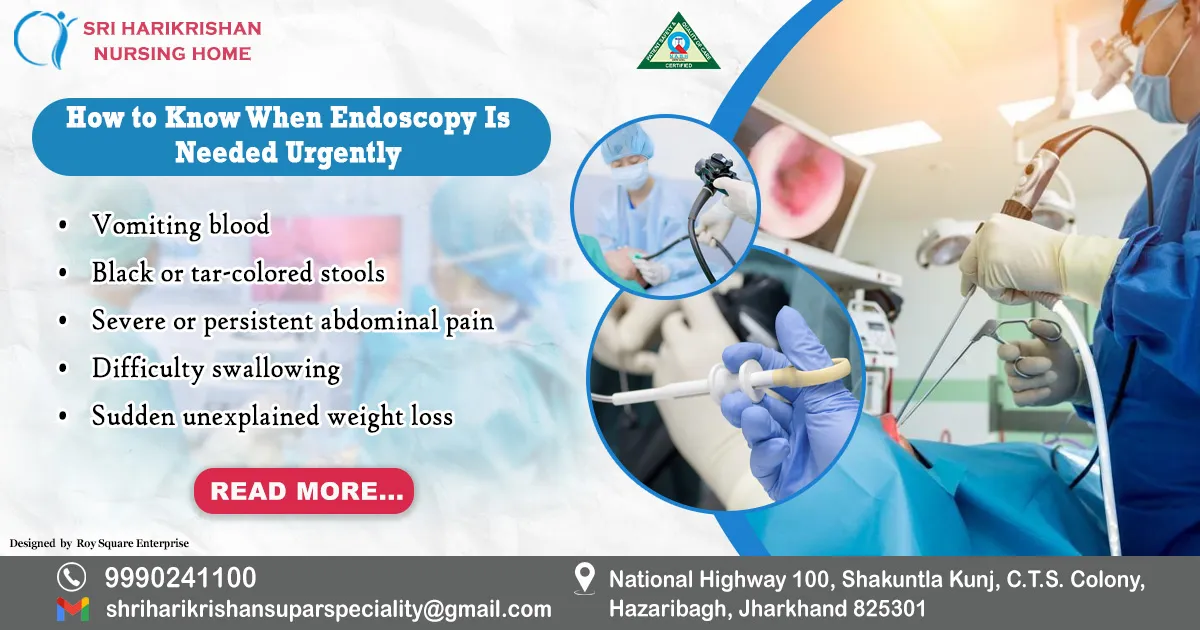
Endoscopy becomes urgent when symptoms appear suddenly or worsen quickly. Warning signs include:
- Vomiting blood
- Black or tar-colored stools
- Severe or persistent abdominal pain
- Difficulty swallowing
- Sudden unexplained weight loss
- Continuous vomiting
- Severe acidity not responding to medicines
- Suspected internal bleeding
Ignoring these symptoms can delay diagnosis and increase risk.
3. Medical Emergencies Where Endoscopy Saves Lives
A safe endoscopy procedure is essential in emergencies such as:
- Upper gastrointestinal bleeding
- Bleeding ulcers
- Food pipe obstruction
- Swallowed foreign objects
- Severe gastritis
- Suspected gastrointestinal tumors
- Chronic liver disease with variceal bleeding
In many cases, endoscopy prevents the need for open surgery.
4. Technology Used in Modern Endoscopy
Modern endoscopy uses advanced technology to ensure safety and accuracy:
- High-definition cameras
- Flexible fiber-optic scopes
- Real-time video imaging
- Safe sedation techniques
- Advanced sterilization systems
These technologies make the procedure precise, painless, and reliable.
5. Advanced Endoscopy Techniques
Today’s endoscopy is far more advanced than simple visualization. Techniques include:
- Therapeutic endoscopy for bleeding control
- Polyp removal during endoscopy
- Biopsy for cancer detection
- Endoscopic band ligation
- Endoscopic clipping
- Minimal-invasive tumor evaluation
These techniques allow diagnosis and treatment in one session, which is critical in emergencies.
6. Endoscopy Procedure: Step-by-Step
A safe endoscopy follows a structured process:
Step 1: Pre-Procedure Evaluation
Medical history, symptoms, and necessary tests are reviewed.
Step 2: Preparation
Fasting is advised. In emergencies, preparation is adjusted safely.
Step 3: Sedation
Mild sedation ensures comfort and reduces anxiety.
Step 4: Endoscope Insertion
The scope is gently inserted through the mouth or rectum.
Step 5: Real-Time Examination
The doctor carefully examines the digestive tract.
Step 6: Immediate Treatment (If Needed)
Bleeding control, biopsy, or removal of abnormal tissue.
Step 7: Recovery Observation
Patient is monitored briefly before discharge or further care.
7. Urgent Treatment Options Through Endoscopy
Endoscopy allows immediate treatment such as:
- Stopping internal bleeding
- Removing blockages
- Treating ulcers
- Sealing torn blood vessels
- Taking biopsies for urgent diagnosis
This rapid response often saves lives.
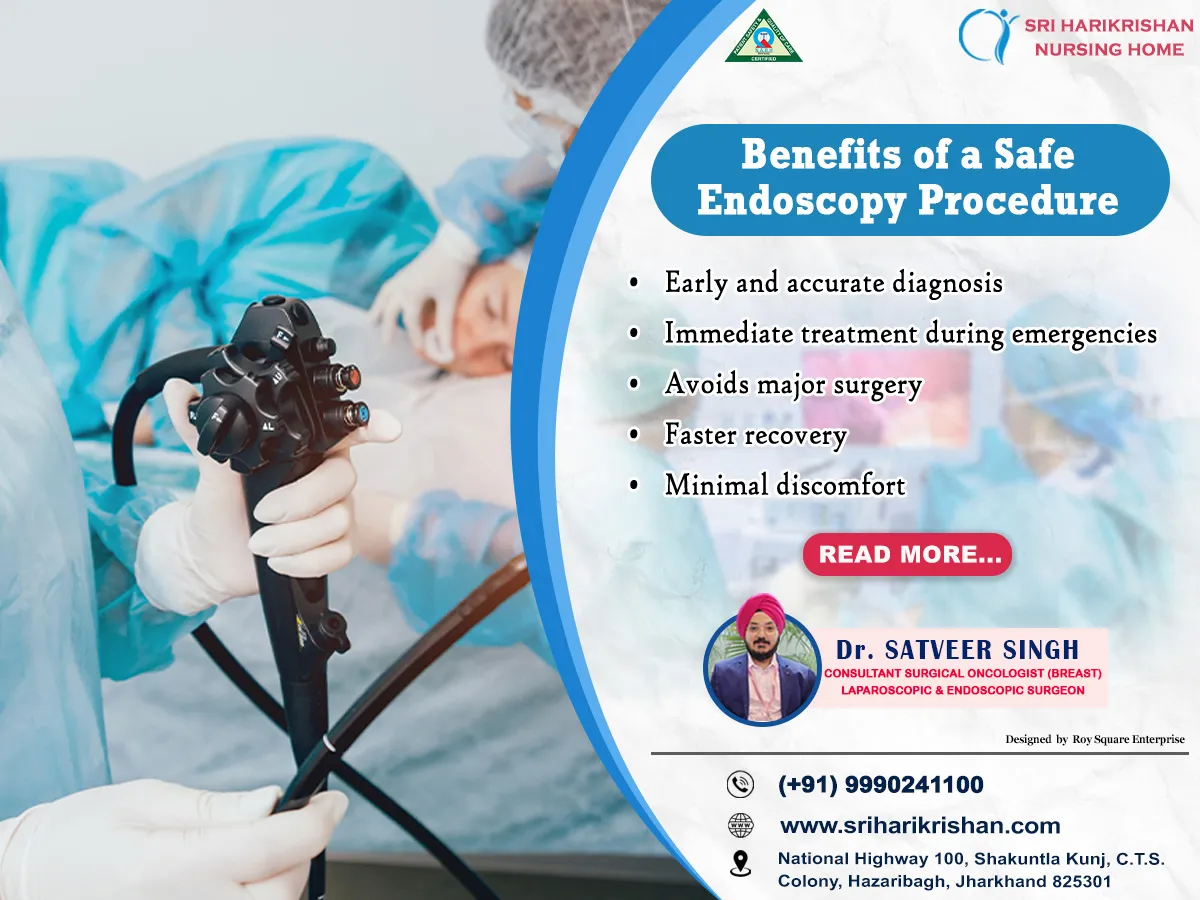
8. Benefits of a Safe Endoscopy Procedure
- Early and accurate diagnosis
- Immediate treatment during emergencies
- Avoids major surgery
- Faster recovery
- Minimal discomfort
- Short hospital stay
- High safety profile
A well-performed endoscopy significantly improves patient outcomes.
9. Important Suggestions Before and After Endoscopy
Before Endoscopy
- Inform doctor about medications
- Follow fasting instructions
- Share history of allergies or chronic illness
After Endoscopy
- Rest for a few hours
- Avoid heavy meals initially
- Follow medical advice strictly
- Report unusual pain or bleeding immediately
10. Role of an Endoscopy Specialist Doctor
The safety of endoscopy depends largely on the doctor’s expertise.
Dr. Satveer Singh, consultant Surgical Oncologist (Breast), proctologist, Endoscopic Surgeon, Laparoscopic & Back Pain Specialist at Shri Harikrishan Nursing Home, Hazaribagh, is known for performing endoscopy with precision, safety, and patient comfort in mind.
His experience allows early detection of serious conditions and timely intervention, especially in emergency cases.
11. Why Choose Shri Harikrishan Nursing Home, Hazaribagh
- Advanced endoscopy facilities
- Emergency diagnostic support
- Modern equipment and safety protocols
- Patient-focused care
- Experienced specialists
Under the guidance of Dr. Satveer Singh, patients receive accurate diagnosis, safe procedures, and ethical medical care tailored to individual needs.
12. Conclusion
A safe endoscopy procedure is one of the most valuable tools in medical emergencies involving the digestive system. It allows doctors to see clearly, act quickly, and treat effectively—often preventing life-threatening complications.
Ignoring symptoms or delaying evaluation can be risky. Timely endoscopy, performed by an experienced specialist, ensures better outcomes, faster recovery, and peace of mind.
1. Is endoscopy painful?
No, it is usually painless with sedation.
2. Is endoscopy safe in emergencies?
Yes, when done by an experienced specialist.
3. How long does the procedure take?
Usually 15–30 minutes.
4. Can treatment be done during endoscopy?
Yes, in many cases.
5. Is hospitalization required?
Often no, unless the condition is serious.
6. Are there risks?
Minimal when performed properly.
7. Can endoscopy detect cancer early?
Yes, very effectively.
8. When can I eat after endoscopy?
As advised, usually after a few hours.
9. Is repeat endoscopy required?
Only if medically necessary.
10. Who should perform an endoscopy?
A trained endoscopic surgeon.