
Here’s What You Need to Know About Symptoms – A Comprehensive Guide
Abdominal pain is often ignored until it becomes unbearable. However, some conditions demand immediate medical attention, and appendix hernia is one of them. Though less commonly discussed, an appendix hernia can turn dangerous within hours if left untreated. What starts as mild discomfort may suddenly progress to severe pain, infection, or even life-threatening complications.
At Shri Harikrishan Nursing Home, Hazaribagh, appendix hernia cases are treated with urgency, precision, and patient-focused care to prevent serious outcomes and ensure faster recovery.
1. What Is Appendix Hernia?
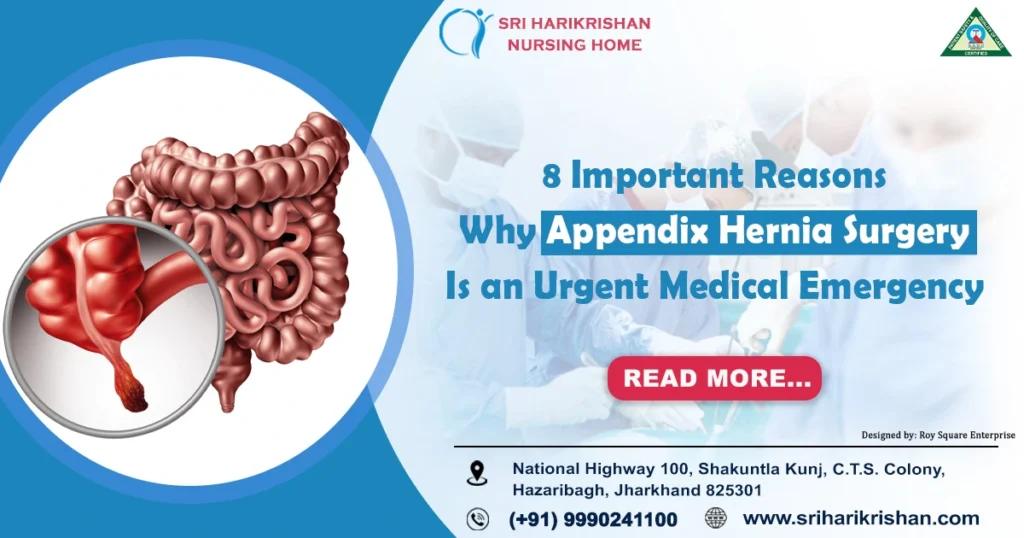
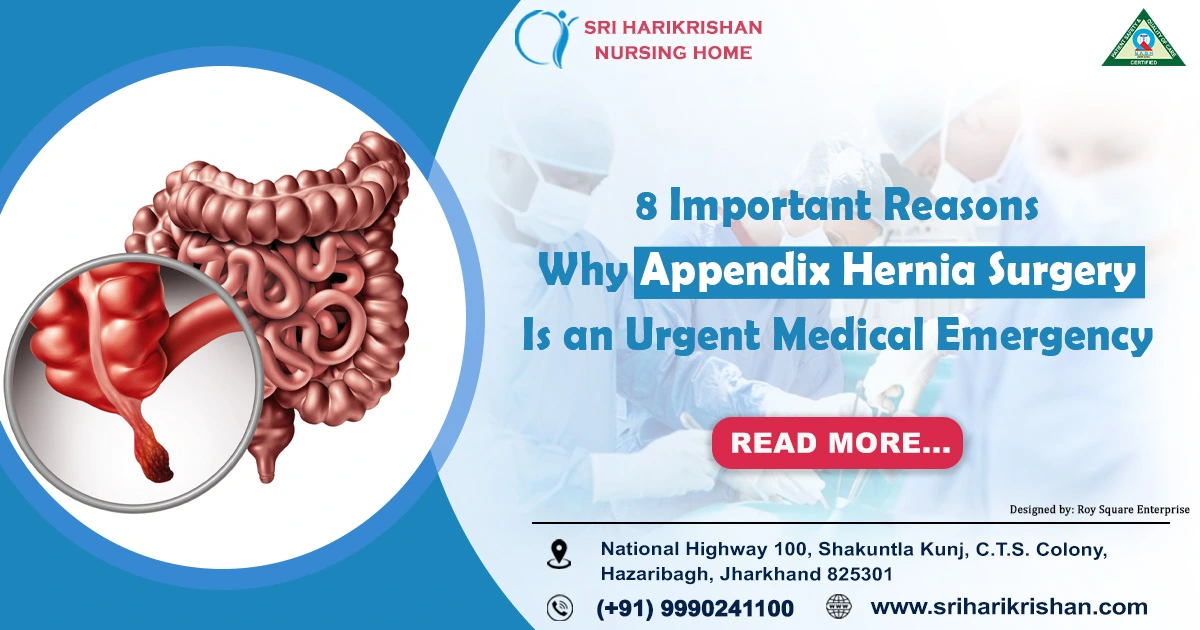
Appendix hernia is a rare condition where the appendix becomes trapped within a hernia sac, most commonly an inguinal or femoral hernia. When this happens, blood flow to the appendix may be compromised, leading to inflammation, infection, or rupture. Because symptoms may appear similar to routine hernia pain, diagnosis is often delayed—making timely surgery crucial.
2. Symptoms You Should Never Ignore
Appendix hernia symptoms may vary, but warning signs include:
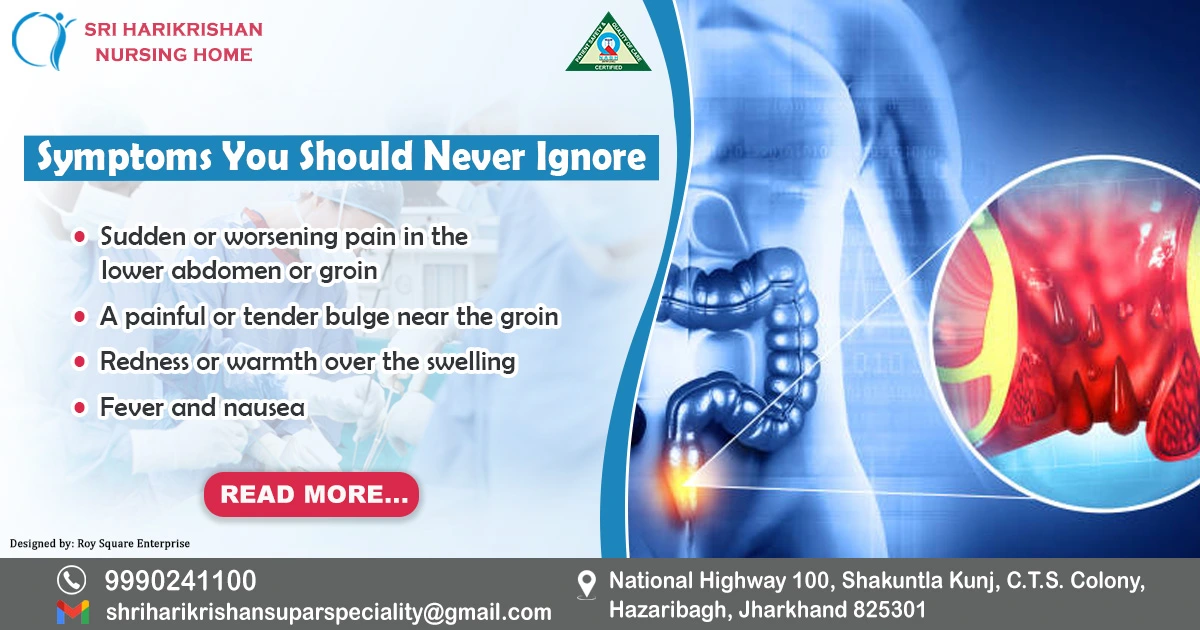
Sudden or worsening pain in the lower abdomen or groin
A painful or tender bulge near the groin
Redness or warmth over the swelling
Fever and nausea
Vomiting or loss of appetite
Inability to push the hernia back inside
Severe pain with movement or coughing
3. Causes of Appendix Hernia
Appendix hernia develops due to a combination of factors, including:
Weak abdominal muscles
Increased abdominal pressure
Chronic coughing or constipation
Heavy lifting
Previous abdominal surgeries
Congenital weakness of the abdominal wall
These factors allow internal organs, including the appendix, to protrude through weakened areas.
4. Risk Factors
Certain individuals are at higher risk of developing appendix hernia complications:
Older adults
People with long-standing hernias
Obesity
Chronic smokers
Patients with weak core muscles
Individuals delaying hernia treatment
Ignoring early hernia symptoms increases the chances of appendix involvement.
5. 8 Powerful Reasons Appendix Hernia Surgery Is a Medical Emergency
1. Risk of Appendix Inflammation
Trapped appendix can become inflamed rapidly, similar to acute appendicitis.
2. Sudden Appendix Rupture
Delay can cause rupture, spreading infection inside the abdomen.
3. Strangulation of Blood Supply
Loss of blood flow leads to tissue death and severe pain.
4. High Infection Risk
Bacterial infection can spread quickly, leading to abscess or peritonitis.
5. Severe Pain Escalation
Pain often worsens suddenly, signaling internal damage.
6. Failure of Conservative Treatment
Medications cannot resolve trapped appendix hernia.
7. Risk of Sepsis
Untreated infection may enter the bloodstream, becoming life-threatening.
8. Life-Saving Opportunity
Timely surgery can prevent complications and save lives.
At Shri Harikrishan Nursing Home, Hazaribagh, emergency surgical intervention is prioritized to avoid such outcomes.
6. Diagnosis
Accurate diagnosis includes:
Detailed physical examination
Ultrasound of abdomen and groin
CT scan for confirmation
Blood tests to detect infection
Early diagnosis helps surgeons decide the urgency and surgical approach.
7. Urgent Treatment Options
Appendix hernia always requires surgical treatment, which may include:
Emergency appendectomy
Hernia repair surgery
Laparoscopic or https://sriharikrishan.com/laparoscopic-surgery-dr-satveer-singh/open surgery based on condition
Antibiotics for infection control
Complex cases are handled by experienced surgeons like Dr. Satveer Singh, Consultant Surgical Oncologist (Breast), Proctologist, Endoscopic Surgeon, Laparoscopic & Back Pain Specialist, ensuring safe and precise management.

8. Possible Complications If Delayed
Ignoring appendix hernia symptoms may lead to:
Appendix rupture
Peritonitis (abdominal infection)
Sepsis
Intestinal obstruction
Longer hospital stay
Increased surgical risk
Early surgery dramatically reduces these complications.
9. After Surgery Recovery & Care
Recovery usually includes:
Short hospital stay
Pain management
Gradual return to normal activities
Avoiding heavy lifting for a few weeks
Follow-up consultations
With proper care and guidance, most patients recover smoothly and return to daily life quickly.
10. Conclusion
Appendix hernia may be rare, but its consequences can be severe if ignored. Recognizing symptoms early and seeking immediate surgical care can prevent life-threatening complications. With prompt diagnosis, expert surgery, and compassionate care at Shri Harikrishan Nursing Home, Hazaribagh, patients can expect safe treatment and a smooth recovery.
1. Is appendix hernia common?
No, it is rare but dangerous.
2. Can appendix hernia heal without surgery?
No, surgery is mandatory.
3. Is the surgery risky?
Early surgery is safe and effective.
4. How long is recovery?
Most patients recover within a few weeks.
5. Is laparoscopic surgery possible?
Yes, in many cases.
6. Can appendix rupture inside a hernia?
Yes, if untreated.
7. Does appendix hernia cause fever?
Yes, when infection develops.
8. Can it happen again?
Recurrence is rare after proper repair.
9. Is it life-threatening?
Yes, if treatment is delayed.
10. Where should it be treated?
At a hospital with emergency surgical facilities.