
1. Introduction
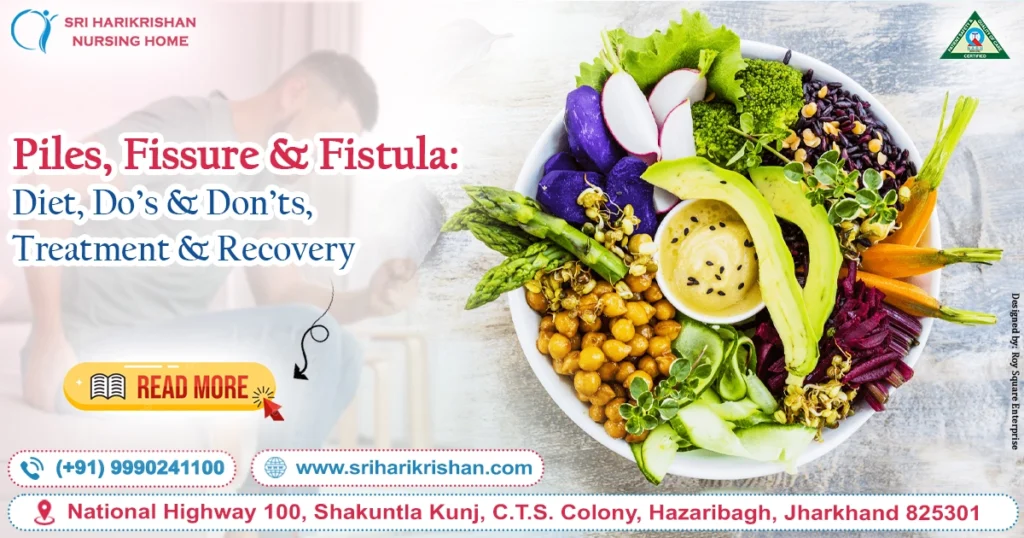
Piles, fissure, and fistula are common anorectal conditions that many people hesitate to talk about, yet they can cause significant discomfort in daily life. Pain during bowel movements, bleeding, or swelling are often ignored until the problem becomes severe.
The good part is—these conditions can be managed effectively with the right diet, proper care, and timely medical attention.
2. What are Piles, Fissure, and Fistula?
Understanding the difference helps in early care:
- Piles (Hemorrhoids): Swollen veins in the rectum or anus causing pain and bleeding
- Fissure: A small tear in the anal lining leading to sharp pain during stool
- Fistula: An abnormal infected tract between the anal canal and skin
Though different, all three are often linked to constipation and poor bowel habits.
3. What to Eat (Best Diet for Faster Recovery)
Diet plays a major role in relief and healing.
- High-Fiber Foods: Oats, whole grains, green vegetables, fruits like papaya and banana
- Fluids: Drink 8–10 glasses of water daily
- Probiotics: Yogurt and buttermilk improve digestion
- Light Foods: Soups, dal, soft meals during pain
A fiber-rich diet softens stool and reduces strain, which is key to recovery.
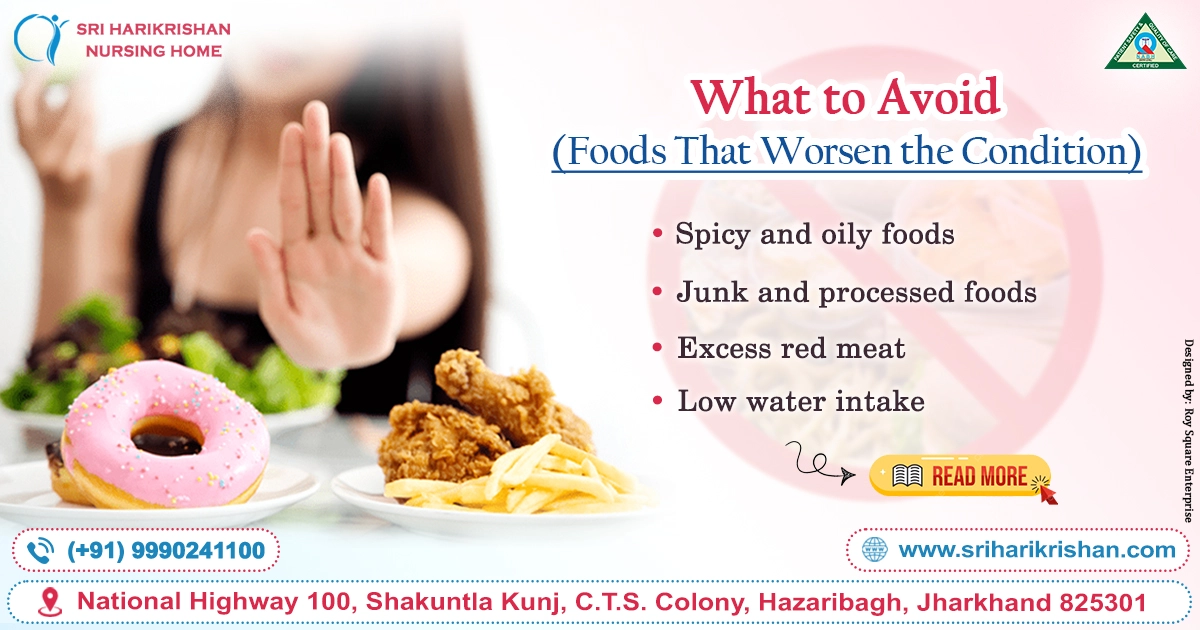
4. What to Avoid (Foods That Worsen the Condition)
Certain foods can trigger or worsen symptoms:
- Spicy and oily foods
- Junk and processed foods
- Excess red meat
- Too much tea, coffee, or alcohol
- Low water intake
Avoiding these helps reduce irritation and inflammation.
5. Lifestyle Precautions
Simple changes can make a big difference:
- Avoid constipation at all costs
- Do not sit for long hours continuously
- Stay physically active (walking, light exercise)
- Maintain a healthy weight
- Develop a regular bowel routine
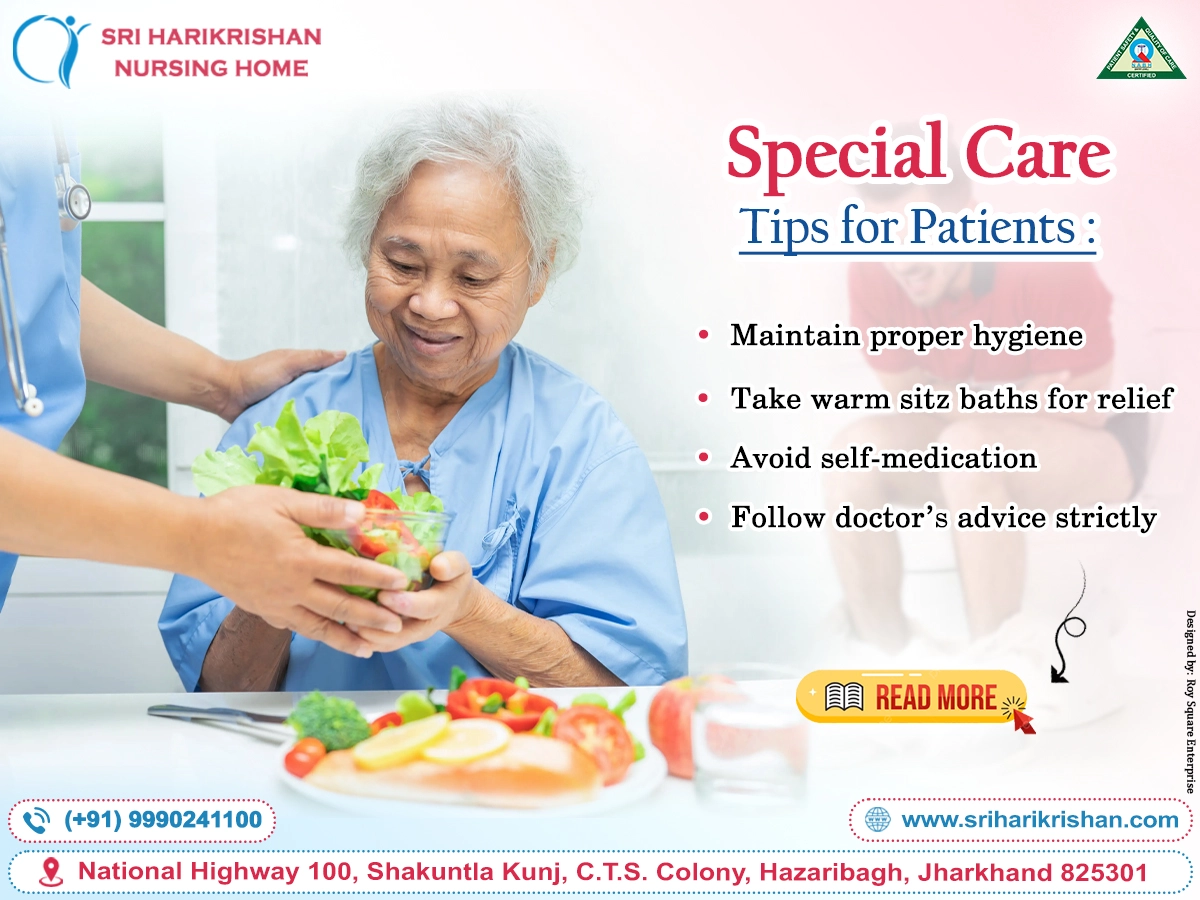
6. Special Care Tips for Patients
- Do not strain during bowel movement
- Maintain proper hygiene
- Take warm sitz baths for relief
- Avoid self-medication
- Follow doctor’s advice strictly
For expert guidance, Dr. Satveer Singh, Consultant Surgical Oncologist (Breast), Proctologist, Endoscopic Surgeon, Laparoscopic & Back Pain Specialist at Shri Harikrishan Nursing Home, Hazaribagh, provides personalized care for such conditions.
7. Treatment Options
Treatment depends on the severity:
- Medications: For early-stage relief
- Laser Treatment: Minimally invasive and faster recovery
- Surgery: Required in advanced cases
With modern techniques, treatment is safer and less painful than before.
Patients treated under Dr. Satveer Singh, Consultant Surgical Oncologist (Breast), Proctologist, Endoscopic Surgeon, Laparoscopic & Back Pain Specialist at Shri Harikrishan Nursing Home, Hazaribagh, benefit from advanced care and precise diagnosis.
8. Quick Recovery Tips
- Increase fiber and water intake
- Avoid stress and irregular habits
- Follow medication schedule properly
- Attend regular follow-ups
Recovery becomes smoother when discipline is maintained.
9. Why Choose Shri Harikrishan Nursing Home, Hazaribagh
- Experienced and skilled specialists
- Advanced treatment facilities
- Patient-focused care approach
- Affordable and reliable services
Under the care of Dr. Satveer Singh, Consultant Surgical Oncologist (Breast), Proctologist, Endoscopic Surgeon, Laparoscopic & Back Pain Specialist, patients receive trusted treatment with a focus on long-term relief.
10. Conclusion
Piles, fissure, and fistula may feel uncomfortable to discuss, but they are very much treatable. The key lies in early attention, the right diet, and proper medical care.
Ignoring symptoms only delays recovery. Take action early, follow a healthy routine, and consult an expert when needed.
Q1. What is the best diet for piles?
High-fiber foods and plenty of fluids.
Q2. Can fissure heal on its own?
Mild cases can heal with proper care and diet.
Q3. Is fistula curable without surgery?
Most cases require surgical treatment.
Q4. How much water should I drink?
At least 8–10 glasses daily.
Q5. Is sitting harmful in piles?
Long sitting can worsen symptoms.
Q6. Are these conditions serious?
They can become serious if ignored.
Q7. Is laser treatment safe?
Yes, it is safe and widely used.
Q8. How long does recovery take?
Depends on the condition and treatment.
Q9. Can diet alone cure piles?
Diet helps, but medical care may be needed.
Q10. Which doctor should I consult?
A specialist Dr. Satveer Singh.