
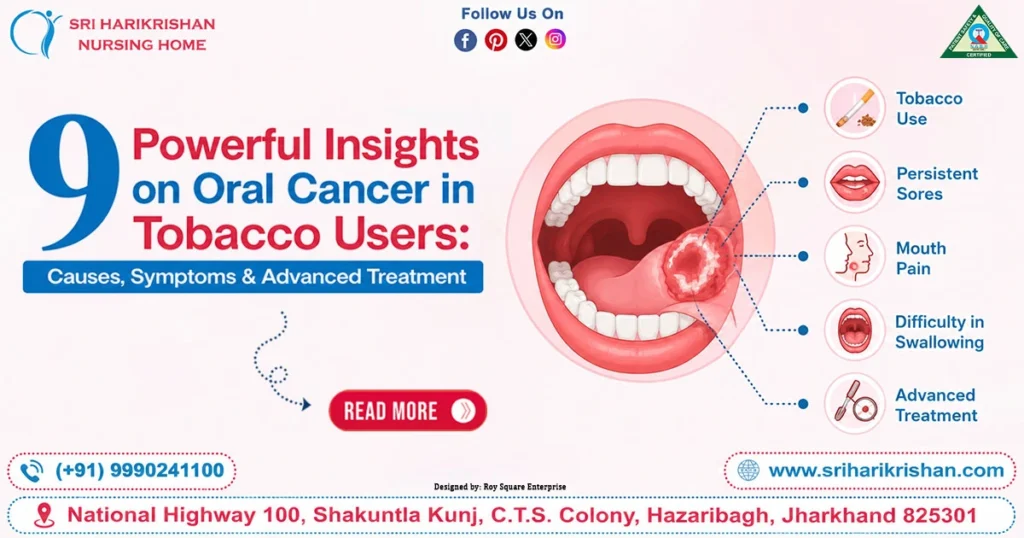
1. What Is Oral Cancer?
- Lips
- Tongue
- Inner cheeks
- Floor of the mouth
- Roof of the mouth
- Gums
- Hard and soft palate
It usually begins as an abnormal growth of cells that multiply uncontrollably. If left untreated, oral cancer can spread to nearby tissues and lymph nodes.
People who smoke cigarettes, bidis, cigars, or chew tobacco products such as gutkha, khaini, and paan with tobacco are at a much higher risk.
2. How Does Tobacco Cause Oral Cancer?
Tobacco contains thousands of chemicals, many of which are known carcinogens (cancer-causing substances).
These chemicals repeatedly damage the cells lining the mouth. Over time, the damaged cells undergo genetic changes, eventually leading to cancer.
Smoking Tobacco
Smoking exposes the lips, tongue, gums, and throat to harmful chemicals and heat, increasing cancer risk.
Smokeless Tobacco
Chewing tobacco keeps cancer-causing substances in direct contact with the mouth for prolonged periods, making it equally dangerous.
Additional Risk Factors
- Long-term tobacco use
- Heavy alcohol consumption
- Poor oral hygiene
- HPV infection
- Family history of cancer
- Nutritional deficiencies
The combination of tobacco and alcohol further increases the likelihood of developing oral cancer.
3. Early Warning Signs of Oral Cancer
Watch out for:
- White patches (Leukoplakia)
- Red patches (Erythroplakia)
- Persistent pain inside the mouth
- Lump or thickened area in the mouth
- Difficulty chewing food
- Difficulty swallowing
- Loose teeth without dental disease
- Numbness of the tongue or lips
- Jaw stiffness
Any of these symptoms should never be ignored, especially by tobacco users.
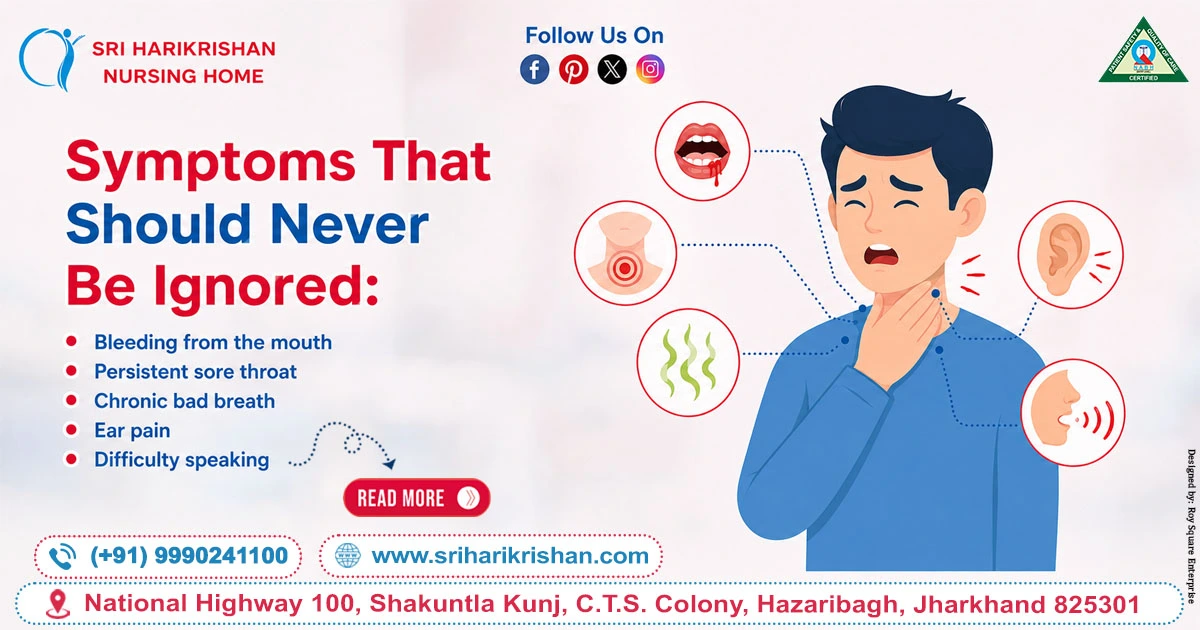
4. Symptoms That Should Never Be Ignored
As oral cancer progresses, symptoms may become more noticeable.
These include:
- Bleeding from the mouth
- Persistent sore throat
- Chronic bad breath
- Ear pain
- Difficulty speaking
- Pain while swallowing
- Swelling in the neck
- Weight loss
- Change in voice
- Enlarged lymph nodes
If these symptoms last longer than two weeks, consult a cancer specialist immediately.
5. Stages of Oral Cancer
Understanding the stage helps doctors determine the best treatment plan.
Stage I
Small tumour confined to one area.
Stage II
Tumour grows larger but has not spread.
Stage III
Cancer may spread to nearby lymph nodes.
Early-stage diagnosis offers the highest chance of successful treatment.
6. How Is Oral Cancer Diagnosed?
Diagnosis involves several important steps.
Clinical Examination
A specialist carefully examines the mouth, tongue, gums, and throat.
Medical History
Information about tobacco use, symptoms, and lifestyle is reviewed.
Biopsy
A small tissue sample is taken for laboratory testing to confirm cancer.
Imaging Tests
Depending on the case, doctors may recommend:
- CT Scan
- MRI
- PET Scan
- X-ray
These tests help determine the extent of the disease.
For expert evaluation and timely diagnosis, Dr. Satveer Singh, Consultant Surgical Oncologist (Breast), Proctologist, Endoscopic Surgeon, Laparoscopic & Back Pain Specialist at Shri Harikrishan Nursing Home, Hazaribagh, provides comprehensive cancer assessment and personalized treatment guidance.
7. Treatment Options for Oral Cancer
Treatment depends on the stage, location, and overall health of the patient.
Surgery
Removes the cancerous tissue while preserving healthy structures whenever possible.
Radiation Therapy
Uses high-energy rays to destroy cancer cells.
Chemotherapy
Medicines help kill cancer cells or shrink tumours.
Targeted Therapy
Targets specific cancer cells while minimizing damage to healthy tissues.
Reconstructive Surgery
Helps restore appearance and function after cancer surgery when required.
Under the guidance of Dr. Satveer Singh, patients receive individualized treatment planning focused on achieving the best possible outcomes with compassionate care.
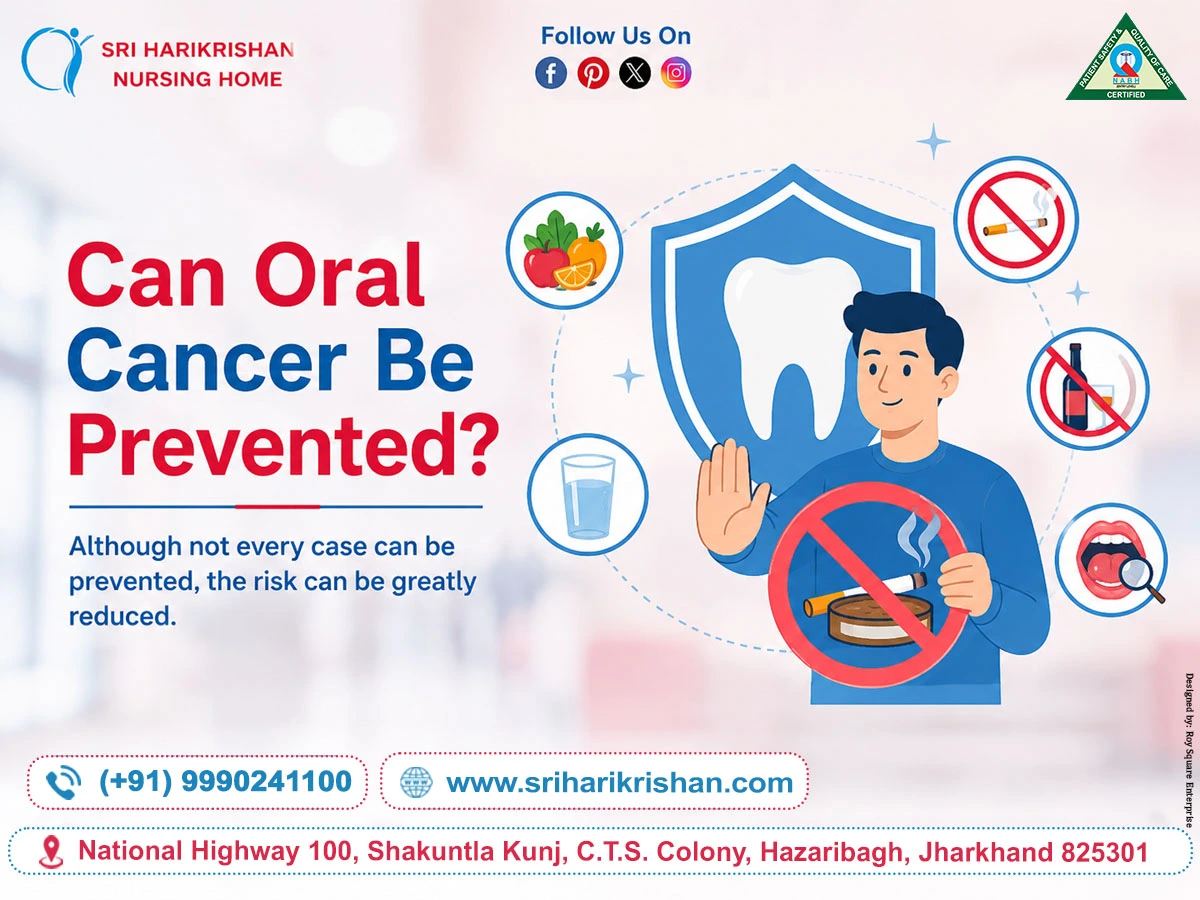
8. Can Oral Cancer Be Prevented?
Although not every case can be prevented, the risk can be greatly reduced.
Prevention Tips
- Quit smoking completely.
- Avoid chewing tobacco and gutkha.
- Limit alcohol consumption.
- Maintain excellent oral hygiene.
- Visit your dentist regularly.
- Get screened if you are a long-term tobacco user.
- Protect your lips from excessive sunlight.
Lifestyle changes can significantly lower your risk.
9. When Should You See a Doctor?
Seek immediate medical attention if you notice:
- Persistent white or red patches
- Difficulty swallowing
- Unexplained bleeding
- Lump inside the mouth
- Persistent mouth pain
- Swelling in the neck
- Voice changes
Do not delay treatment. Early diagnosis saves lives.
If you experience these symptoms, consult Dr. Satveer Singh, Consultant Surgical Oncologist (Breast), Proctologist, Endoscopic Surgeon, Laparoscopic & Back Pain Specialist at Shri Harikrishan Nursing Home, Hazaribagh, for expert evaluation and appropriate treatment.
Why Choose Shri Harikrishan Nursing Home, Hazaribagh?
Choosing the right healthcare facility plays an important role in successful cancer treatment.
Why Patients Trust Shri Harikrishan Nursing Home
- Experienced cancer specialist
- Personalized patient care
- Advanced diagnostic facilities
- Modern surgical techniques
- Comprehensive treatment planning
- Compassionate nursing staff
- Affordable healthcare services
- Patient-focused approach
- Timely diagnosis and follow-up care
- Commitment to quality treatment
The hospital is dedicated to providing reliable and patient-centric care for individuals diagnosed with oral cancer and other complex surgical conditions.
Conclusion
Oral cancer remains one of the most serious health risks associated with tobacco use, but it is also one of the cancers where early detection can make a remarkable difference. Paying attention to warning signs, avoiding tobacco, maintaining good oral hygiene, and seeking timely medical advice can greatly improve outcomes.
If you notice any persistent changes in your mouth or have a long history of tobacco use, don’t ignore the symptoms. Early consultation can help prevent complications and improve the chances of successful treatment.
1. Can chewing tobacco cause oral cancer?
Yes. Chewing tobacco significantly increases the risk of developing oral cancer.
2. Is smoking the biggest cause of oral cancer?
Smoking is one of the leading causes, especially when combined with alcohol use.
3. What is the first sign of oral cancer?
A mouth ulcer that does not heal within two weeks is one of the earliest warning signs.
4. Can oral cancer be cured?
Yes. Early-stage oral cancer has a high success rate when treated promptly.
5. Is oral cancer painful?
Some patients experience pain, while others may initially have painless ulcers or patches.
6. Who is at the highest risk?
People who smoke or chew tobacco for many years are at the highest risk.
7. How is oral cancer diagnosed?
Doctors diagnose it through clinical examination, biopsy, and imaging tests.
8. Can quitting tobacco reduce the risk?
Absolutely. Stopping tobacco use significantly lowers the future risk of oral cancer.
9. How often should tobacco users get screened?
Long-term tobacco users should undergo regular oral cancer screening as advised by their healthcare provider.
10. Which doctor should I consult for oral cancer?
A Surgical Oncologist is the most appropriate specialist for evaluation and treatment planning.