

1. Introduction to Breast Tumor Treatment
Hearing the words “breast tumor” can be frightening, but modern medical science has made breast tumor treatment safer, faster, and more effective than ever before. Early diagnosis and advanced treatment options now offer excellent recovery outcomes for many patients.
A breast tumor refers to an abnormal growth of cells inside the breast tissue. Some tumors are non-cancerous (benign), while others may be cancerous (malignant). The good news is that with timely medical attention, most breast conditions can be successfully managed.
At Shri Harikrishan Nursing Home, Hazaribagh, advanced care is available under the guidance of Dr. Satveer Singh, Consultant Surgical Oncologist (Breast), Proctologist, Endoscopic Surgeon, Laparoscopic & Back Pain Specialist. His patient-focused approach and modern surgical expertise help patients receive safe and effective treatment with confidence.
2. Types of Breast Tumors
Breast tumors are generally divided into two categories:
Benign Breast Tumors
These are non-cancerous growths and usually do not spread to other body parts.
Common Benign Tumors:
- Fibroadenoma
- Breast cysts
- Lipoma
- Intraductal papilloma
Though benign tumors are less dangerous, they still require proper medical evaluation.
Malignant Breast Tumors
Malignant tumors are cancerous and can spread if left untreated.
Common Types:
- Ductal carcinoma
- Lobular carcinoma
- Inflammatory breast cancer
- Triple-negative breast cancer
Early-stage detection greatly improves treatment success.
3. Common Symptoms of Breast Tumors
Recognizing symptoms early can make a major difference in treatment outcomes.
Common Warning Signs:
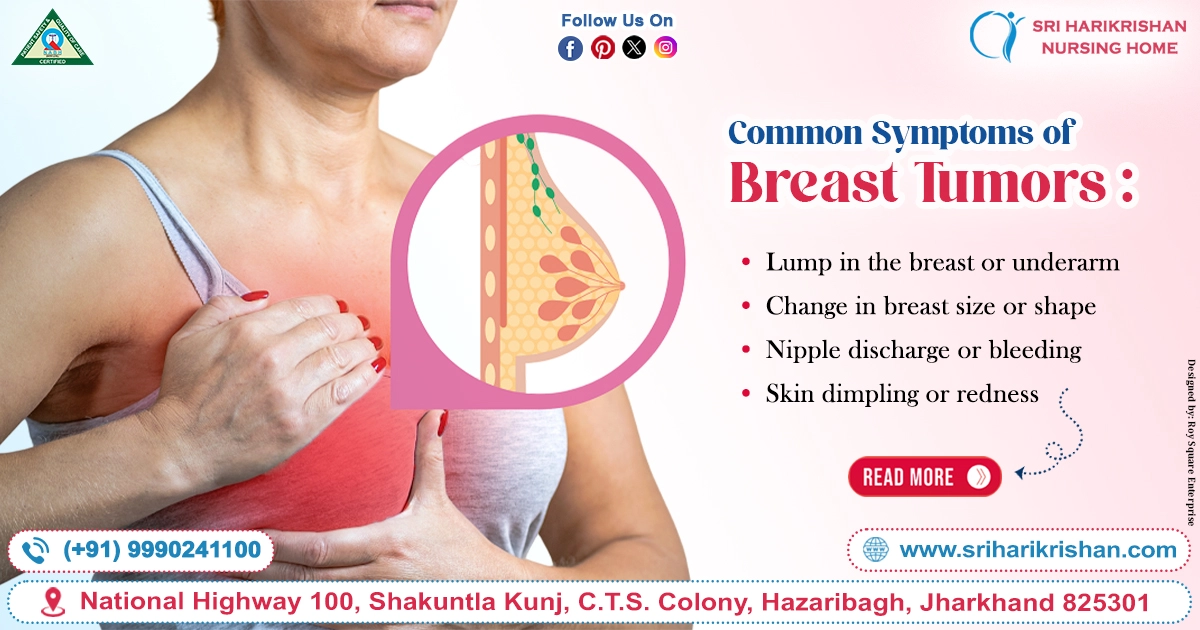
- Lump in the breast or underarm
- Change in breast size or shape
- Nipple discharge or bleeding
- Skin dimpling or redness
- Persistent breast pain
- Swelling around the breast area
Any unusual breast change should never be ignored.
4. Causes & Risk Factors
Several factors may increase the risk of developing breast tumors.
Major Risk Factors:
- Family history of breast cancer
- Increasing age
- Hormonal imbalance
- Obesity
- Smoking and alcohol consumption
- Lack of physical activity
- Genetic mutations such as BRCA1 and BRCA2
However, many patients may develop breast tumors even without obvious risk factors.
5. Diagnosis of Breast Tumors
Proper diagnosis helps doctors plan the most effective treatment.
Common Diagnostic Tests
Mammography
A specialized breast X-ray used for detecting abnormalities.
Ultrasound
Helps identify whether a lump is solid or fluid-filled.
MRI Scan
Provides detailed breast imaging for accurate evaluation.
FNAC & Biopsy
A small tissue sample is collected to determine whether the tumor is benign or malignant.
At Shri Harikrishan Nursing Home, Hazaribagh, advanced diagnostic facilities help ensure timely and accurate detection.
6. Breast Tumor Treatment Options
Treatment depends on the tumor type, size, stage, and overall patient health.
Surgery
Lumpectomy
Only the tumor and surrounding tissue are removed while preserving the breast.
Mastectomy
Removal of the entire breast in advanced cases.
Laparoscopic & Endoscopic Surgery
Modern minimally invasive procedures offer:
- Smaller incisions
- Less pain
- Faster recovery
- Minimal scarring
Dr. Satveer Singh, Consultant Surgical Oncologist (Breast), Proctologist, Endoscopic Surgeon, Laparoscopic & Back Pain Specialist, specializes in advanced minimally invasive surgical techniques for better patient comfort and recovery.
Chemotherapy
Uses medicines to destroy cancer cells.
Radiation Therapy
Targets remaining cancer cells after surgery.
Hormone Therapy
Helpful in hormone-sensitive breast cancers.
Targeted Therapy
Advanced treatment that specifically attacks cancer cells while protecting healthy tissues.
7. Recovery After Breast Tumor Surgery
Helpful Recovery Tips:
- Follow prescribed medications regularly
- Avoid heavy lifting initially
- Eat a balanced nutritious diet
- Attend follow-up appointments
- Maintain emotional and mental well-being
Most patients gradually return to normal daily activities within a few weeks.
8. Breast Cancer Prevention Tips
While not all breast tumors can be prevented, healthy habits may reduce the risk.
Prevention Measures:
- Regular breast self-examination
- Annual health checkups
- Routine mammography screening
- Maintain healthy body weight
- Exercise regularly
- Avoid smoking and alcohol
- Eat a balanced diet
Early screening remains one of the strongest weapons against breast cancer.
9. When to See a Breast Specialist
Consult a specialist immediately if you notice:
- Any persistent breast lump
- Sudden changes in breast appearance
- Nipple discharge or bleeding
- Unexplained breast pain
- Swelling in the underarm
Delaying medical consultation can increase complications.

10. Importance of Early Medical Care
Early diagnosis saves lives. Timely treatment:
- Improves survival rates
- Reduces treatment complexity
- Preserves breast tissue in many cases
- Lowers emotional stress
- Enhances recovery outcomes
Seeking early medical attention from experienced specialists like Dr. Satveer Singh can make a significant difference in treatment success.
Why Choose Shri Harikrishan Nursing Home, Hazaribagh?
Patients trust Shri Harikrishan Nursing Home because of its:
- Advanced surgical care
- Experienced specialists
- Modern diagnostic facilities
- Personalized patient treatment
- Minimally invasive surgical expertise
- Compassionate healthcare environment
Under the care of Dr. Satveer Singh, Consultant Surgical Oncologist (Breast), Proctologist, Endoscopic Surgeon, Laparoscopic & Back Pain Specialist, patients receive comprehensive and patient-friendly breast tumor treatment with a focus on safety, comfort, and faster recovery.
Conclusion
Breast tumor treatment has advanced tremendously over the years, offering patients safer procedures, better outcomes, and improved quality of life. Whether the tumor is benign or malignant, early diagnosis and expert treatment are the keys to successful recovery.
Modern surgical methods, including laparoscopic and minimally invasive procedures, now allow faster healing with reduced discomfort. If you or your loved one notice any unusual breast symptoms, do not delay medical consultation.
With expert care from Dr. Satveer Singh at Shri Harikrishan Nursing Home, Hazaribagh, patients can access trusted, advanced, and compassionate breast healthcare services close to home.
1. Is every breast tumor cancerous?
No, many breast tumors are benign and non-cancerous.
2. Can breast tumors be treated without surgery?
Some benign tumors may only need observation, while cancerous tumors often require surgery.
3. Is breast tumor surgery painful?
Modern surgical techniques and anesthesia help minimize pain significantly.
4. How long does recovery take after breast surgery?
Recovery may take a few days to several weeks depending on the procedure.
5. What is the difference between lumpectomy and mastectomy?
Lumpectomy removes only the tumor, while mastectomy removes the entire breast.
6. Can breast cancer return after treatment?
There is a possibility of recurrence, which is why regular follow-up is important.
7. Is laparoscopic breast surgery safe?
Yes, minimally invasive surgery is considered safe and effective in selected cases.
8. When should women start mammography screening?
Most women are advised to begin regular screening after age 40, depending on risk factors.
9. Are all breast lumps dangerous?
No, but every breast lump should be medically evaluated.
10. Why is early diagnosis important in breast cancer?
Early diagnosis increases treatment success and improves survival rates significantly.