
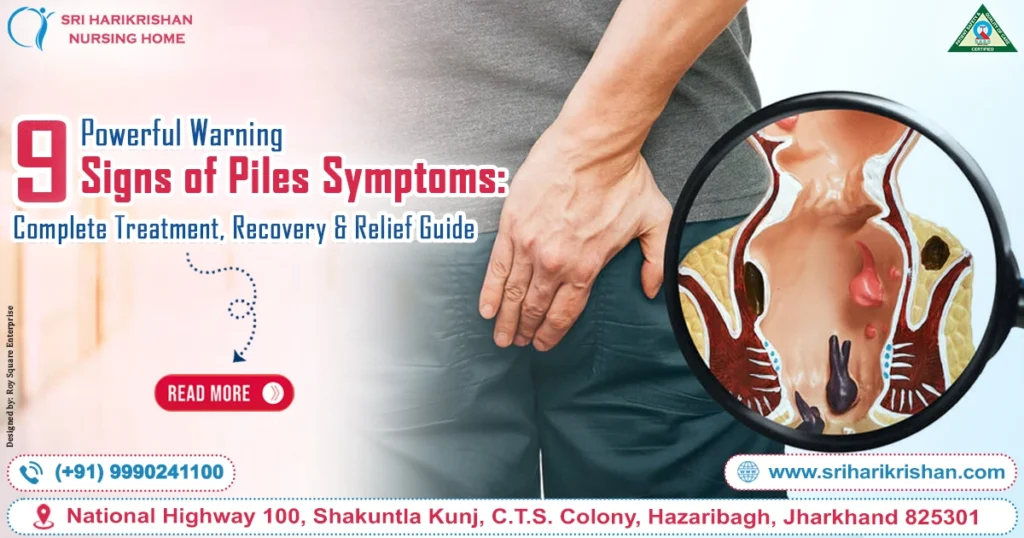
Piles, also known as hemorrhoids, are one of the most common yet uncomfortable health conditions affecting people of all age groups. Many individuals hesitate to discuss piles symptoms openly, which often delays proper treatment and worsens the condition over time.
The good news is that piles can be treated effectively when diagnosed early. Understanding the symptoms, causes, and treatment options can help prevent complications and improve quality of life.
At Shri Harikrishan Nursing Home, Hazaribagh, advanced care for piles and anorectal disorders is available under the expert supervision of Dr. Satveer Singh, Consultant Surgical Oncologist (Breast), Proctologist, Endoscopic Surgeon, Laparoscopic & Back Pain Specialist. With modern diagnostic methods and minimally invasive procedures, patients receive safe, effective, and personalized treatment.
This comprehensive guide explains the early symptoms of piles, causes, diagnosis, treatment options, recovery process, and when to seek medical attention.
1. What Are the First Symptoms of Piles?
The earliest signs of piles are often mild and ignored by many people. Recognizing these symptoms early can help prevent the condition from becoming severe.
Common Early Symptoms Include:
- Mild itching around the anus
- Discomfort while sitting
- Pain during bowel movements
- Small amount of bleeding during stool
- Burning sensation near the anal area
- Feeling of incomplete bowel emptying
These symptoms may appear occasionally in the beginning but can worsen without proper care.
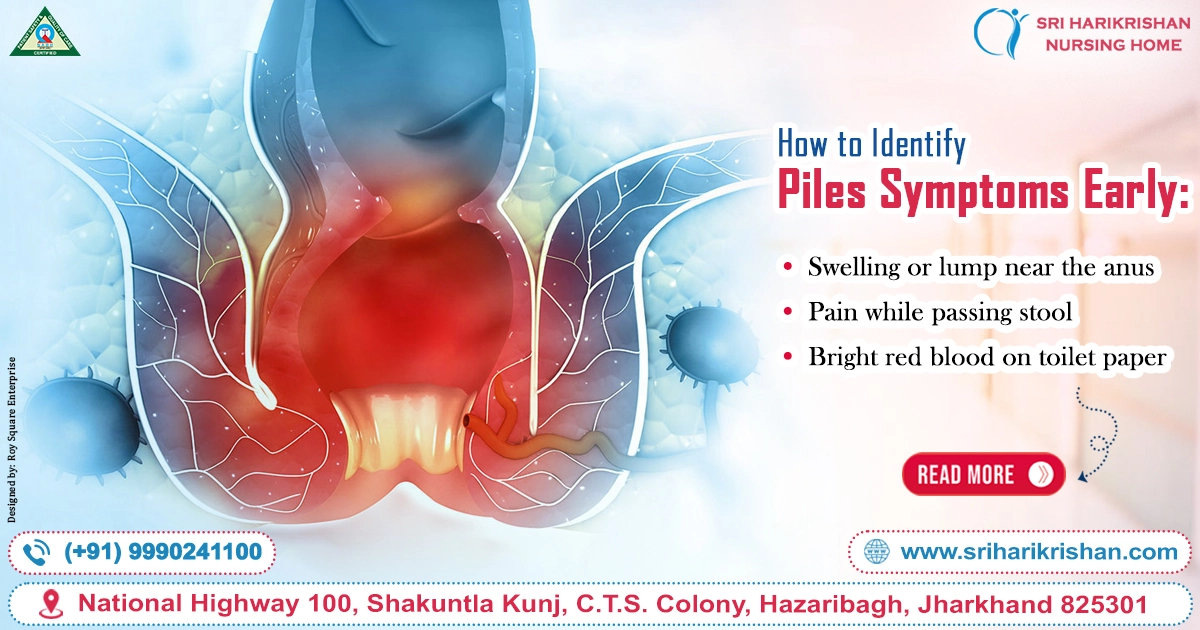
2. How to Identify Piles Symptoms Early
Early identification of piles symptoms is important for faster recovery and easier treatment.
Watch for These Signs:
- Swelling or lump near the anus
- Pain while passing stool
- Bright red blood on toilet paper
- Mucus discharge
- Persistent itching
- Difficulty sitting comfortably
Many people mistake piles symptoms for temporary digestive problems.
At Shri Harikrishan Nursing Home, Hazaribagh, patients receive proper evaluation and advanced treatment planning for early-stage piles.
3. Causes of Bleeding During Stool
Bleeding during bowel movement is one of the most common signs of piles. It usually occurs when swollen blood vessels inside the rectum become irritated during stool passage.
Common Causes Include:
- Chronic constipation
- Excessive straining
- Hard stool
- Low-fiber diet
- Dehydration
- Sitting for long hours
- Pregnancy-related pressure
Although piles are a common reason for rectal bleeding, medical evaluation is important to rule out other serious conditions.
4. Difference Between Internal and External Piles Symptoms
Piles are mainly classified into two types — internal and external hemorrhoids.
| Internal Piles | External Piles |
| Located inside the rectum | Located outside the anus |
| Usually painless initially | Often painful |
| Bleeding is common | Swelling and itching common |
| May prolapse during stool | Visible lump near anus |
| Less discomfort in early stage | Difficulty sitting |
Understanding the difference helps in choosing the right treatment approach.
5. Diagnosis of Piles
Accurate diagnosis is important for effective treatment and recovery.
Physical Examination
Doctors examine the affected area for swelling and inflammation.
Proctoscopy
A small instrument is used to inspect the rectum internally.
Colonoscopy
Recommended in selected cases to rule out other gastrointestinal conditions.
Dr. Satveer Singh, Consultant Surgical Oncologist (Breast), Proctologist, Endoscopic Surgeon, Laparoscopic & Back Pain Specialist at Shri Harikrishan Nursing Home, Hazaribagh, provides advanced diagnostic evaluation for piles and other anorectal disorders.
6. Treatment Options for Piles Symptoms
Treatment depends on the severity of symptoms and the type of piles.
Medications
Creams, ointments, and oral medicines help reduce pain and swelling.
Lifestyle Changes
Improving food habits and avoiding constipation can control symptoms effectively.
High-Fiber Diet
Fiber-rich foods soften stool and reduce straining.
Minimally Invasive Procedures
Rubber band ligation and injection therapy may be advised for moderate piles.
Laser Piles Surgery
Advanced laser treatment offers:
- Minimal pain
- Faster healing
- Less bleeding
- Short hospital stay
- Quick return to daily activities
Modern laser surgery has become one of the safest and most effective treatment options for piles today.
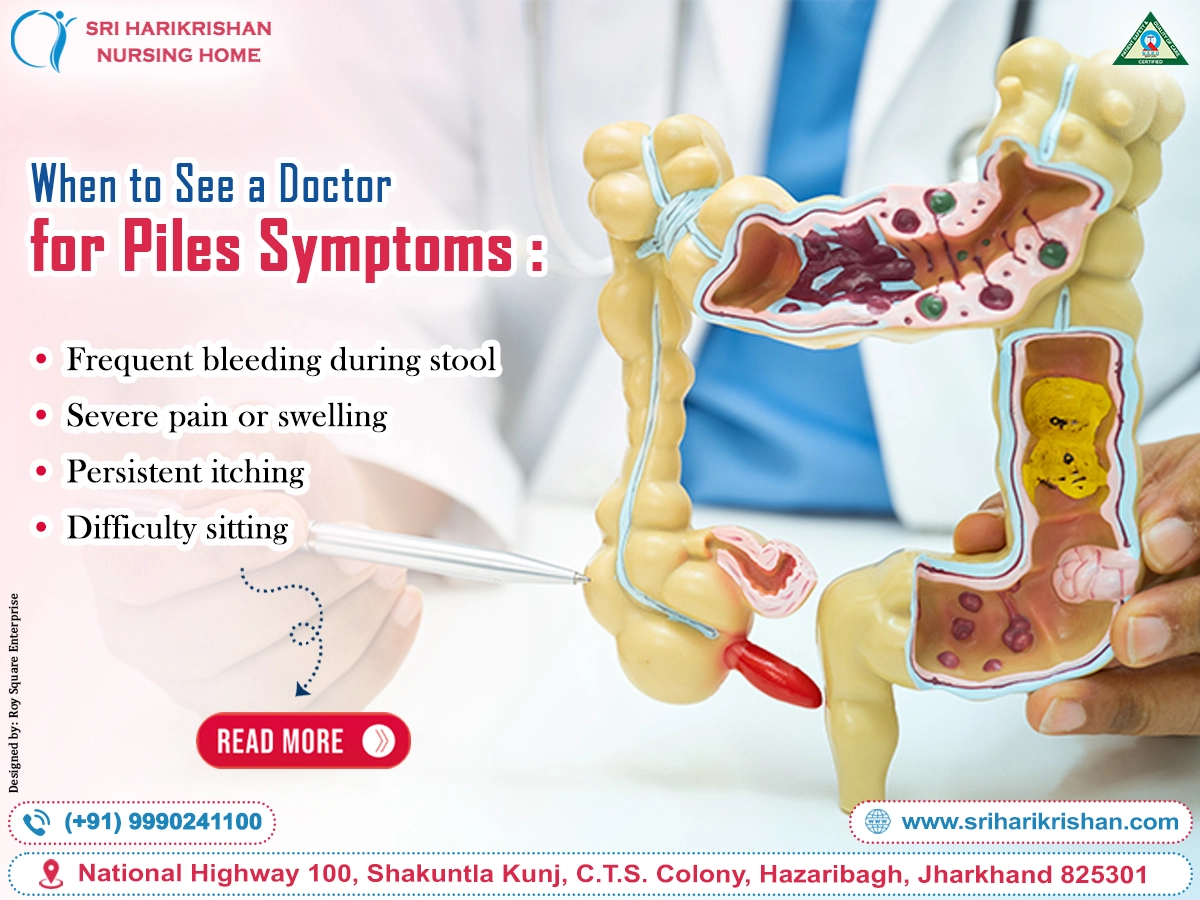
7. When to See a Doctor for Piles Symptoms
Medical consultation should not be delayed if you experience:
- Frequent bleeding during stool
- Severe pain or swelling
- Persistent itching
- Difficulty sitting
- Chronic constipation
- Recurring piles symptoms
Early treatment prevents complications and improves recovery outcomes significantly.
8. Piles Symptoms and Treatment Guide
Managing piles requires a combination of medical care and healthy lifestyle habits.
Helpful Daily Habits:
- Drink plenty of water
- Eat fiber-rich foods
- Avoid prolonged sitting
- Exercise regularly
- Avoid excessive straining during bowel movement
- Maintain proper hygiene
Following these habits can reduce symptoms and prevent recurrence.
9. Recovery and Healing
Recovery after piles treatment depends on the severity of the condition and the treatment method used.
Recovery Tips:
- Follow prescribed medications properly
- Avoid spicy and oily foods
- Stay hydrated
- Take adequate rest
- Avoid lifting heavy weights initially
Patients undergoing laser surgery often recover faster with minimal discomfort.
Under the expert care of Dr. Satveer Singh at Shri Harikrishan Nursing Home, Hazaribagh, patients receive personalized guidance for smooth recovery and long-term relief.
Why Choose Shri Harikrishan Nursing Home, Hazaribagh?
Shri Harikrishan Nursing Home is trusted for advanced surgical and anorectal care with patient-focused treatment.
Key Highlights:
- Advanced laser piles treatment
- Experienced specialist care
- Modern diagnostic facilities
- Minimally invasive procedures
- Personalized treatment plans
- Safe and hygienic environment
- Faster recovery support
Patients benefit from the expertise of Dr. Satveer Singh, Consultant Surgical Oncologist (Breast), Proctologist, Endoscopic Surgeon, Laparoscopic & Back Pain Specialist, known for advanced and compassionate care.
Conclusion
Piles may begin with mild discomfort, but ignoring early symptoms can lead to serious pain, bleeding, and complications. Recognizing warning signs early and seeking timely treatment can make recovery easier and more effective.
Modern treatment options, especially laser surgery and minimally invasive procedures, have made piles treatment safer and more comfortable than ever before.
At Shri Harikrishan Nursing Home, Hazaribagh, patients receive expert care under Dr. Satveer Singh, ensuring advanced treatment, faster recovery, and compassionate support for long-term relief from piles symptoms.
Taking early action today can help you live a healthier and more comfortable tomorrow.
1. What is the main symptom of piles?
Bleeding during stool and anal discomfort are common symptoms.
2. Can piles heal without surgery?
Early-stage piles may improve with medicines and lifestyle changes.
3. Is bleeding during stool always due to piles?
No. Proper medical evaluation is necessary.
4. Are piles painful?
External piles are usually more painful than internal piles.
5. Can constipation cause piles?
Yes. Chronic constipation is a major cause.
6. Is laser piles surgery safe?
Yes. It is minimally invasive and widely preferred.
7. How long does recovery take after piles treatment?
Recovery depends on treatment type and overall health.
8. Can piles come back after treatment?
Yes, unhealthy lifestyle habits may cause recurrence.
9. Which foods should be avoided in piles?
Spicy, oily, and low-fiber foods should be limited.
10. When should I consult a piles specialist?
Seek medical advice if symptoms persist or worsen.